A home can look spotless and still have a hidden mold problem.
That surprises many homeowners. They may clean often, see no dark spots on the walls, and notice no obvious water damage. Everything may look normal on the surface.
But mold does not always grow where you can see it.
It can develop behind walls, under flooring, inside cabinets, around plumbing, or in other hidden areas where moisture is present. That means a clean looking home is not always a mold free home.
At K9 Mold Dog Inspection, trained mold detection dogs can help identify areas where mold odor may be present, even when there are no obvious visual signs.
Mold Does Not Need to Be Visible
Many people picture mold as large black or green patches on walls or ceilings.
Sometimes mold does look like that. But it can also grow in areas that are completely hidden from view.
Mold needs moisture, a food source, and the right environment to grow. Homes contain plenty of materials mold can grow on, including drywall, wood, carpet backing, insulation, and other building materials.
If moisture reaches one of those areas, mold may begin developing without showing itself on the surface.
Common hidden locations include:
- Behind drywall
- Under carpet or flooring
- Inside kitchen and bathroom cabinets
- Around plumbing lines
- Behind appliances
- Inside wall cavities
- Near windows and doors
- Under sinks
- Around HVAC systems
A room can look perfectly clean while mold is growing only a few inches away behind a surface.
Small Moisture Problems Can Create Bigger Issues
Mold problems often begin with moisture.
The problem is that moisture is not always easy to notice.
A slow pipe leak inside a wall may only release a small amount of water each day. A window may let moisture enter during heavy rain. An air conditioning system may create condensation in an area you rarely inspect.
These small problems can continue for a long time before visible damage appears.
Some common moisture sources include:
- Slow plumbing leaks
- Roof leaks
- High indoor humidity
- Condensation
- Water around windows
- Leaking appliances
- Previous flooding
- Poor ventilation
Even after the visible water dries, moisture may remain trapped inside building materials.
That hidden moisture can create the conditions mold needs to grow.
This is why knowing the history of your home matters. If there has ever been a leak, flood, plumbing problem, or major moisture issue, the affected area may deserve a closer look.
Your Nose May Notice Something Before Your Eyes Do
One of the first clues of hidden mold is often a smell.
Homeowners may describe it as musty, damp, earthy, or stale.
Sometimes the odor is strong. Other times, it is only noticeable when you walk into a certain room or open a particular cabinet.
You may even notice that the smell comes and goes.
That can make the source difficult to find.
Cleaning the room, spraying air freshener, or opening windows may cover the odor for a short time, but it does not solve the source of the problem.
When a musty smell keeps returning, there may be something happening in an area that cannot easily be seen.
That is where a more targeted inspection may help.
How Mold Detection Dogs Help Search Hidden Areas
Dogs have an incredible sense of smell.
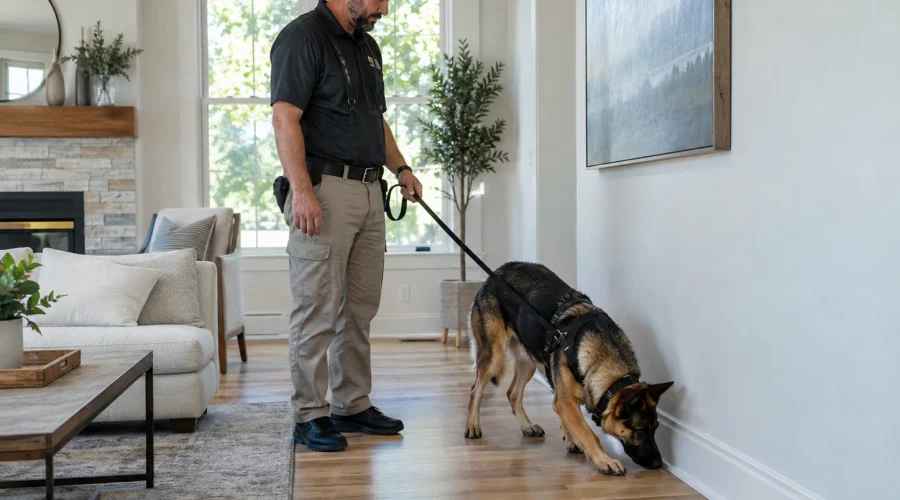
With proper training, mold detection dogs can learn to recognize specific mold odors and alert their handler when they detect them.
During an inspection, the dog can search rooms, walls, cabinets, floors, and other areas of the home.
The goal is not for the dog to diagnose the entire mold problem. Instead, the dog can help identify locations that may deserve additional attention.
This can help narrow down the search.
For example, imagine a homeowner smells something musty in a bedroom but cannot find the source.
Instead of guessing and opening several walls, a trained mold detection dog may alert near one specific section of the room.
That gives the inspection team a more focused area to investigate.
Additional testing or inspection can then be used when needed.
A Clean Home Can Still Need a Mold Inspection
Keeping your home clean is important, but cleanliness alone cannot prevent every mold problem.
Hidden leaks, trapped moisture, building materials, humidity, and ventilation problems can all create conditions where mold may develop.
You may want to consider a professional mold inspection if:
- You notice a recurring musty smell
- Your home has had past water damage
- You recently discovered a plumbing leak
- Certain rooms feel unusually damp
- You have moisture around windows or doors
- You suspect mold but cannot see where it is
- Mold has been found in the home before
- You want to investigate a suspicious area before opening walls
The biggest mistake is assuming that everything is fine simply because the home looks clean.
Hidden mold can stay out of sight for a long time.
At K9 Mold Dog Inspection, trained mold detection dogs can help locate areas of concern and make the inspection process more targeted.
If something feels off in your home, you do not have to wait until mold becomes visible before looking for answers.
Finding the problem early can help you understand what is happening and what steps may need to come next.