Managing rental properties means dealing with repairs, cleaning, maintenance, and new tenant preparation on a regular basis. One problem that can be easy to miss is mold.
A unit may look clean after a tenant moves out, but moisture problems can still be hiding behind walls, under flooring, around windows, or inside cabinets. If those problems are not found before the next tenant moves in, they may become much harder and more expensive to handle later.
That is why many property managers work with mold inspection experts between tenant move-outs. A professional inspection can help identify possible moisture and mold concerns while the property is empty and easier to inspect.
For property managers who want to protect their buildings, reduce surprises, and prepare units properly, a mold inspection can be an important part of the turnover process.
Mold Problems Are Not Always Easy to See
Some mold problems are obvious. You may notice dark spots around a window, staining on drywall, or a musty smell inside a bathroom.
Other problems are much harder to find.
A slow plumbing leak under a sink may have been happening for weeks. Moisture may have entered a wall after a roof leak. A tenant may have cleaned visible mold without reporting the moisture problem that caused it.
Even small amounts of water can create conditions where mold may grow.
A professional mold inspector looks beyond the surface. The goal is not simply to search for visible mold. The inspector also looks for signs that moisture has been present.
This may include areas around:
- Plumbing fixtures and pipes
- Bathrooms and kitchens
- Windows and exterior walls
- HVAC systems
- Attics and crawl spaces
- Basements
- Water heaters
- Areas with past leaks or flooding
Checking these spaces between tenants gives property managers an opportunity to deal with concerns before the next lease begins.
Move-Outs Create the Perfect Time for Mold Detection
An empty rental unit is often much easier to inspect than an occupied property.
Furniture, boxes, rugs, and personal belongings can block walls, floors, vents, and other areas that need to be checked. Once the tenant moves out, inspectors may have better access to the entire property.
This makes professional mold detection especially useful during the turnover period.
A property manager can inspect the unit while other work is already being completed. Cleaning crews may be working, maintenance teams may be making repairs, and painters may be preparing the walls.
Adding a mold inspection during this window may help uncover issues before new flooring, paint, cabinets, or other materials cover them.
For example, painting over a stained wall may improve how the room looks, but it does not fix a hidden leak. If moisture is still entering the wall, the problem may return.
Finding the cause first can help prevent wasted repairs.
Mold Detection Dogs Can Help Locate Hidden Problem Areas
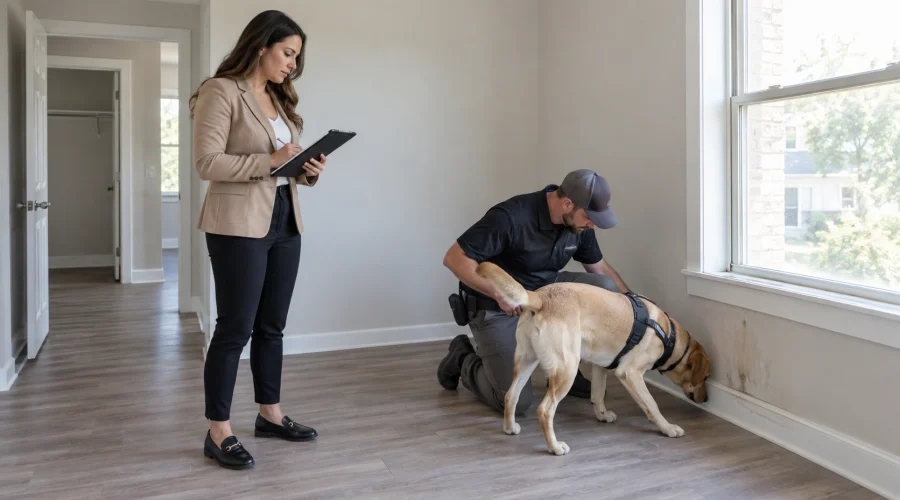
One unique tool that may be used during an inspection is a trained mold detection dog.
Dogs have an extremely strong sense of smell. When properly trained, mold detection dogs can alert their handlers to odors connected with certain types of mold.
This can help narrow down areas that may deserve closer inspection.
For property managers, this may be especially valuable in larger homes, rental units, apartments, and properties where the source of a musty odor is unclear.
A detection dog does not replace a complete inspection. Instead, the dog can work together with an experienced inspector to help identify areas that may need additional attention.
This approach may help reduce unnecessary disruption.
Instead of immediately opening several walls or removing large sections of flooring, the inspection team can focus more closely on areas where concerns have been identified.
That can help property managers make better decisions about the next step.
Why Early Mold Inspections Can Save Property Managers Trouble
Property managers have a lot to manage during a tenant turnover. It can be tempting to focus only on what can be seen.
However, ignoring signs of moisture may create bigger problems later.
Scheduling an inspection before a new tenant moves in can provide several benefits:
- Helps identify possible hidden moisture problems
- Gives maintenance teams time to make needed repairs
- Allows easier access to walls, floors, cabinets, and closets
- Helps prevent damaged materials from being covered with new finishes
- Creates a cleaner starting point for the next tenant
- Helps property managers document the condition of the unit
- Reduces the chance of discovering a larger problem after move-in
Early action can also make property maintenance easier.
Imagine discovering a leak while the unit is empty. Repairs can usually be scheduled without working around a tenant’s schedule or moving furniture.
Compare that with finding the same problem two months after a new tenant moves in. Now the property manager may need to coordinate inspections, repairs, access times, and communication with the resident.
Finding the issue during turnover is often much simpler.
Make Mold Inspection Part of Your Property Turnover Plan
A good tenant turnover process is about more than making a rental look clean.
It is also an opportunity to check the condition of the property before someone new moves in.
If there has been a leak, plumbing problem, roof issue, flooding event, musty odor, or unexplained staining, bringing in experienced mold inspection experts can help you understand what may be happening.
K9 Mold Dog Inspection combines professional inspection methods with trained mold detection dogs to help locate areas that may require closer attention.
Whether you manage one rental home or multiple properties, checking for possible mold concerns between tenants can help you stay ahead of maintenance problems.
The best time to discover a hidden problem is often before the next tenant receives the keys.
If you are preparing a rental property for a new tenant and want greater confidence about its condition, schedule a professional inspection with K9 Mold Dog Inspection.