You clean the mold. The area looks better. Then a few weeks or months later, it shows up again.
That can be frustrating, but there is usually a reason.
Mold often comes back when the visible growth is removed but the moisture problem behind it is still there. If the source of the moisture is not found and corrected, mold may continue to grow in the same area or spread to nearby materials.
That is why a good mold inspection should focus on more than what can be seen on the surface.
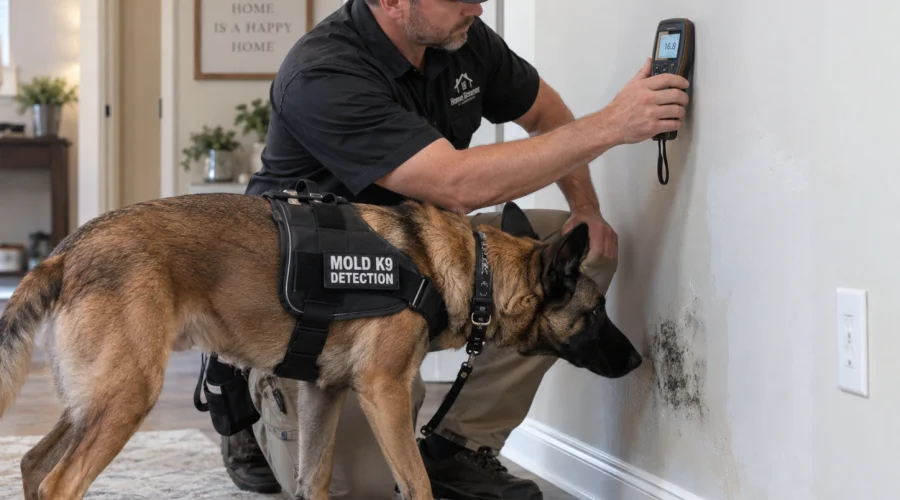
At K9 Mold Dog Inspection, trained mold detection dogs can help identify areas where mold odor may still be present, including places that are difficult to see or reach.
Why Mold Can Return After Cleanup
Mold needs moisture to grow.
If you wipe mold off a wall but a pipe is still leaking behind it, the conditions that caused the problem have not changed.
The same can happen after water damage. A wall, floor, cabinet, or other building material may look dry on the outside while moisture remains trapped underneath.
Some common reasons mold returns include:
- A hidden plumbing leak
- Water getting in around windows or doors
- Roof leaks
- High indoor humidity
- Poor ventilation
- Damp crawl spaces or basements
- Moisture trapped under flooring
- Wet insulation inside walls
- Incomplete drying after water damage
Cleaning the surface may improve the appearance, but it does not always solve the cause.
The Visible Mold May Not Be the Whole Problem
What you see may only be one small part of the mold growth.
Mold can develop behind drywall, underneath cabinets, beneath flooring, around plumbing lines, or inside other hidden spaces.
For example, you may find a patch of mold near a baseboard and clean it. But if water has been leaking behind the wall, there may still be mold growth inside the wall cavity.
This is where the situation becomes difficult.
Tearing open walls without knowing where the problem is located can create unnecessary damage. At the same time, ignoring the possibility of hidden mold may allow the problem to continue.
A more targeted inspection can help narrow down the areas that deserve closer attention.
How Mold Detection Dogs Can Help Find the Source
Dogs have a powerful sense of smell.
When trained for mold detection, they can recognize mold related odors and alert their handler to areas where those odors are present.
This can help during an inspection because mold is not always visible.
A trained dog may alert around areas such as:
- Walls and baseboards
- Cabinets
- Flooring
- Plumbing areas
- Closets
- Bathrooms
- Kitchens
- Areas affected by past water damage
The goal is not to guess where mold might be. The goal is to gather more useful information about where the strongest areas of concern may be located.
Once a suspicious location is identified, the inspector can determine whether additional testing or investigation may be needed.
This can make the inspection process more focused.
Why Finding the Moisture Source Matters
Removing mold without addressing moisture is often only a temporary solution.
The moisture source needs to be identified and corrected so the conditions that allowed mold to grow are reduced.
Depending on the home, the source may be easy to find. Other times, it may take more investigation.
Homeowners should pay attention to signs such as:
- Water stains that keep returning
- Damp or soft drywall
- Bubbling paint
- Warped flooring
- Musty odors
- Condensation around windows
- Rooms that stay humid
- Recurring mold in the same location
These clues can help point toward the real issue.
For example, mold that repeatedly appears near a window may be connected to moisture entering around the frame. Mold near a bathroom wall may be linked to a plumbing or ventilation problem.
Finding and fixing the source gives the cleanup a better chance of lasting.
What to Do If Mold Keeps Coming Back
If you have cleaned the same mold more than once, it may be time to look deeper.
Instead of repeating the same cleanup process, consider having the area professionally inspected.
A more complete approach may include checking for:
- Hidden moisture
- Past water damage
- Plumbing problems
- Roof or window leaks
- Humidity issues
- Hidden mold growth
A mold inspection can help you understand where the problem may be coming from before more repair work is done.
At K9 Mold Dog Inspection, trained mold detection dogs can help locate areas of concern that may otherwise be overlooked.
The goal is to help homeowners stop chasing the visible mold and start looking for the reason it keeps returning.
If mold continues to come back after cleanup, there may be more happening than you can see. Finding the real source can help you make better decisions about what needs to be repaired, dried, tested, or cleaned next.