Finding mold in your home can feel overwhelming. Once you know there may be a problem, the natural reaction is to get rid of it as fast as possible.
But there is an important step that should come first.
You need to know where the mold is actually coming from.
Starting remediation before locating the exact problem area can lead to wasted money, unnecessary demolition, and mold that returns because the real source was missed.
At K9 Mold Dog Inspection, trained mold detection dogs can help narrow down areas of concern so homeowners have better information before moving forward with cleanup or remediation.
Why Guessing Can Make Mold Remediation More Expensive
Mold is not always visible.
It may be growing behind drywall, under flooring, inside cabinets, near plumbing, or in other hidden areas.
If you only know that mold may be somewhere in the room, it can be difficult to know where to begin.
Some homeowners may assume an entire wall needs to be opened. Others may remove flooring or cabinets before knowing whether those areas are actually affected.
That can quickly increase the cost of the project.
A more targeted inspection can help reduce unnecessary work.
Before opening large sections of the home, it makes sense to narrow down the areas that deserve a closer look.
This can help the remediation process become more focused and efficient.
The Moisture Source Is Just as Important as the Mold
Mold needs moisture to grow.
That means mold is often a sign of another problem happening somewhere nearby.
Common moisture sources can include:
- Leaking plumbing
- Roof leaks
- Water entering around windows
- High indoor humidity
- Condensation
- Past flooding
- Appliance leaks
- Moisture inside wall cavities
Cleaning up the mold without correcting the moisture problem may only provide a temporary solution.
The mold may return if the area becomes wet again.
That is why locating the exact area of concern matters so much.
Once the area is identified, homeowners can investigate what caused the moisture in the first place.
For example, if mold is found near a bathroom wall, the real issue may be a slow pipe leak. If mold is found near a window, there may be water entering around the frame.
Finding the mold and finding the moisture source often go hand in hand.
How Mold Detection Dogs Can Help Narrow the Search
Dogs have an incredible sense of smell.
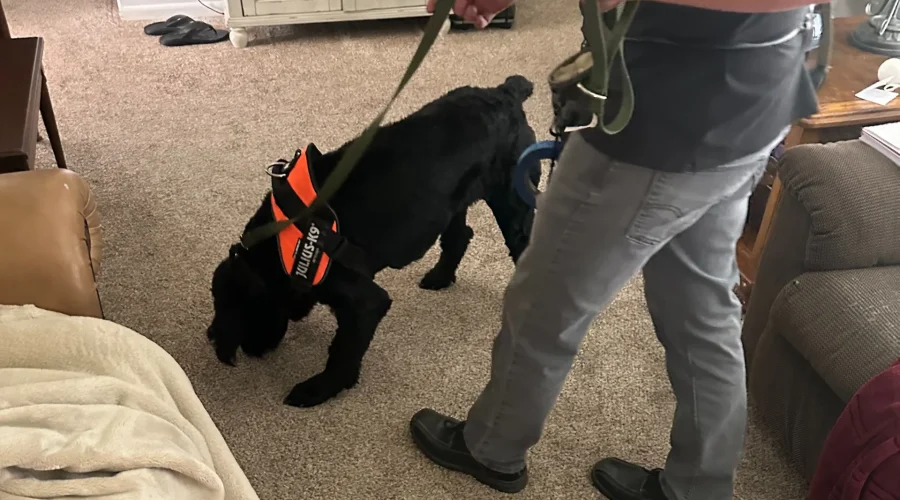
When properly trained, mold detection dogs can recognize specific mold odors and alert their handler to areas where those odors may be present.
This can be helpful when mold is hidden behind surfaces that cannot easily be checked by sight.
A mold detection dog may help identify areas near:
- Walls
- Baseboards
- Cabinets
- Flooring
- Furniture
- Plumbing areas
- Built in structures
This does not mean every alert automatically proves exactly what is happening inside the structure.
Instead, it gives the inspection team a more focused area to investigate further.
That may include moisture readings, surface testing, air sampling, or additional visual inspection depending on the situation.
The goal is to gather better information before major decisions are made.
Why Targeted Remediation Can Protect Your Home
Remediation can involve removing damaged materials, cleaning affected surfaces, controlling dust and mold spores, and correcting the moisture problem.
When the affected area is clearly identified, the work can be more precise.
That can offer several benefits:
- Less unnecessary demolition
- Better control of repair costs
- A clearer remediation plan
- Faster decision making
- Less disruption inside the home
- Better chances of correcting the real source
- Reduced risk of missing another hidden area
Imagine opening one wall because you believe the problem is there, only to find out the real source was several feet away.
That is frustrating and expensive.
The more accurately the problem area can be identified before remediation starts, the better chance you have of making informed decisions about the next step.
When Should You Schedule a Mold Inspection Before Remediation?
A professional inspection may be useful anytime you suspect mold but are unsure of the exact location.
It can be especially helpful if you notice a musty smell but cannot see mold.
You may also want an inspection if your home recently experienced:
- Water damage
- A plumbing leak
- Roof problems
- Flooding
- Repeated humidity issues
- Mold that keeps coming back
- Unexplained stains or wall damage
An inspection can also be helpful when a previous mold problem was treated but you are still concerned that another hidden area may remain.
The goal is not to create more work.
The goal is to understand the problem before making expensive decisions.
Better Information Can Lead to Better Mold Remediation
Mold remediation should not begin with guesswork.
The more you know about where the mold is located and what caused the moisture, the easier it becomes to build a focused plan.
A trained mold detection dog can help identify areas that may deserve closer attention, especially when the problem is hidden behind walls, floors, or other surfaces.
At K9 Mold Dog Inspection, we help homeowners take a more targeted approach to mold concerns.
If you suspect hidden mold in your home, finding the exact location before remediation may save you time, money, and unnecessary repairs.
Getting clear information first can help you make better decisions about what your home actually needs.