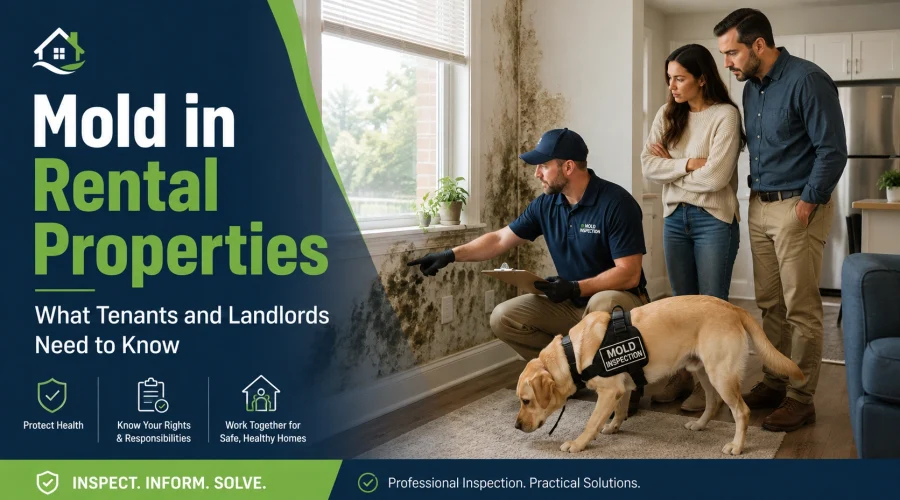
Mold in a rental property can create stress for both tenants and landlords. Tenants may worry about their belongings, comfort, and indoor air. Landlords may worry about property damage, repair costs, and tenant complaints.
The best response is to act early and focus on facts. Mold usually grows where moisture is present. A roof leak, plumbing problem, broken appliance, or poor airflow may create the right conditions for growth.
Professional mold detection can help identify suspicious areas and reduce guesswork. When tenants and landlords work together, they can often find the moisture source faster and prevent the problem from spreading.
Common Signs of Mold in a Rental Property
Visible mold is not always the first warning sign. In many rental homes, mold grows behind walls, under floors, around windows, or inside cabinets before it becomes easy to see.
Tenants should pay attention to changes in the property. A musty odor that does not go away may point to hidden moisture. Peeling paint, stained ceilings, soft drywall, or warped flooring may also show that water is entering the building.
Common signs that may require closer attention include:
- Dark or fuzzy spots on walls, ceilings, or cabinets
- A strong musty smell in one room
- Water stains that grow or return
- Bubbling paint or peeling wallpaper
- Damp carpet or flooring
- Condensation around windows
- Mold that returns after cleaning
- Moisture beneath sinks or around appliances
Not every dark mark is mold. Dirt, dust, soot, and old stains can look similar. A trained mold inspector can examine the area and help determine whether testing or further investigation is needed.
Tenants should report warning signs early instead of waiting for the damage to become severe. Landlords should take each report seriously and investigate the cause.
What Tenants Should Do After Finding Possible Mold
The first step is to notify the landlord or property manager. A phone call may help start the conversation, but written notice creates a clear record. The message should explain where the problem is located, when it was noticed, and whether there is an active leak.
Tenants can also take photos of the visible damage. Pictures should show the affected area and any nearby water source, such as a leaking pipe, window, roof stain, or appliance.
While waiting for the property owner to respond, tenants should avoid disturbing large areas of possible mold. Scrubbing, cutting drywall, pulling up carpet, or using strong chemicals may spread particles into the air.
Tenants can help by following these steps:
- Report leaks and moisture problems right away
- Save photos and written messages
- Keep furniture away from damp walls
- Use bathroom and kitchen fans when available
- Avoid covering stains with paint
- Do not remove damaged building materials without permission
- Keep the area as dry as possible
- Follow all instructions provided by the landlord or inspector
Tenants should also avoid making firm claims about the type of mold without proper mold testing. The color of a spot does not always tell you what it is or how serious the problem may be.
Clear communication is important. The goal should be to locate the moisture source, understand the affected area, and decide what repairs are needed.
What Landlords Should Do After Receiving a Mold Complaint
A mold complaint should not be ignored. Even a small stain may point to a larger leak behind a wall or beneath a floor. Fast action can limit property damage and show the tenant that the issue is being handled.
The landlord or property manager should inspect the area and look for signs of water. This may include checking plumbing lines, roof areas, windows, appliances, HVAC equipment, bathrooms, and nearby rooms.
Small surface growth caused by temporary moisture may sometimes be easy to address. However, repeated mold, hidden odors, large affected areas, or ongoing water damage may require professional help.
A qualified mold inspector can provide an independent look at the property. The inspector may use moisture tools, visual checks, targeted sampling, or trained K9 mold detection to locate suspicious areas.
It is also important to fix the cause of the moisture. Cleaning the surface without repairing the leak will often allow the mold to return. Repairs may involve plumbing work, roof repairs, improved ventilation, drying, or removal of damaged materials.
Landlords should keep records of inspections, repairs, messages, invoices, and testing results. Good records help everyone understand what was found and what actions were taken.
When Professional Mold Testing May Be Needed
Professional mold testing may be useful when the source is unclear, the growth is hidden, or the problem keeps returning. Testing can also help when a tenant and landlord disagree about what is present.
A professional inspection is especially helpful when:
- A strong odor is present without visible mold
- Water damage occurred behind walls or under floors
- The property recently had a flood
- Mold returns after cleaning
- A tenant is preparing to move into a unit
- A landlord needs clear information before repairs
- Multiple rooms show signs of moisture
- Remediation work has already been completed
Testing should not replace a full inspection. Samples may provide useful information, but they do not always show exactly where the moisture is coming from.
Experienced mold inspection experts look at the property as a whole. They examine building materials, moisture patterns, ventilation, water entry points, and hidden spaces.
A trained mold detection dog may also help narrow down the search. This method can be useful in rental properties because it may reduce the need to open several walls or remove large sections of flooring just to locate the source.
How Tenants and Landlords Can Prevent Future Mold
Mold prevention begins with moisture control. Both tenants and landlords have a role in keeping a rental property dry and well maintained.
Landlords should repair leaks quickly, maintain the roof, service HVAC systems, and make sure bathrooms and kitchens have proper ventilation. They should also check that windows, doors, and exterior walls are properly sealed.
Tenants can help by reporting leaks early, using ventilation fans, avoiding indoor humidity buildup, and keeping wet items from sitting on floors or against walls.
Furniture should not be pushed tightly against cold exterior walls if condensation is common. Wet towels and clothing should be dried instead of left in piles. Spills should be cleaned quickly, especially on carpet or wood flooring.
Regular inspections can also help landlords find small problems before they become expensive repairs. A quick check under sinks, behind appliances, and around windows may reveal moisture early.
Get Clear Answers About Mold in a Rental Property
Mold concerns do not need to become a battle between tenants and landlords. Fast communication, written records, moisture repairs, and professional guidance can make the process much easier.
K9 Mold Dog Inspection helps locate hidden mold in rental homes, apartments, and other properties. A trained detection dog can search areas that may be difficult to inspect without causing unnecessary damage.
Whether you are a tenant looking for answers or a landlord trying to protect your property, professional mold detection, mold testing, and support from experienced mold inspection experts can help you make informed decisions.
Contact K9 Mold Dog Inspection to schedule an inspection and find out whether hidden mold may be affecting your rental property.