Your attic is easy to forget about because it is not a space you use every day. But small roof leaks, poor airflow, and trapped moisture can quietly create the right conditions for mold.
By the time you notice a musty smell, dark staining, or moisture damage, the problem may already be more widespread than it looks.
Professional mold detection can help uncover hidden trouble before it causes more damage to your home. An experienced mold inspector can look at the attic environment, moisture conditions, and areas where mold may be developing out of sight.
Why Attics Are Vulnerable to Mold
Attics can become humid very quickly when moisture has nowhere to go.
Warm air from inside your home naturally rises. If that air enters the attic and cannot escape properly, moisture can collect on roof decking, insulation, rafters, and other materials.
Common attic moisture problems include:
- Small roof leaks
- Blocked or damaged vents
- Bathroom fans venting into the attic
- Dryer vents releasing moisture into the attic
- Poor attic insulation
- Air leaks from the living space below
- Condensation during cold weather
- High indoor humidity
None of these problems may seem serious at first. A roof leak might only happen during heavy rain. A vent may only be partially blocked. A bathroom fan may have been installed incorrectly years ago.
Over time, however, repeated moisture exposure can create an environment where mold has the chance to grow.
That is why attic problems should not always be judged by how dramatic they look. Sometimes the smallest moisture issue can become a much larger concern when it continues for months.
How Roof Problems Can Lead to Hidden Mold
Roof leaks are one of the most common reasons moisture enters an attic.
The tricky part is that a roof leak does not always drip water onto the floor. Water can travel along rafters, roof decking, nails, insulation, and framing before showing visible signs.
That means the wet area may be several feet away from where the water actually entered.
Some homeowners only discover the problem after noticing:
- Stains on attic wood
- Damp insulation
- Rust around roofing nails
- Peeling paint on ceilings
- Musty odors upstairs
- Water marks near walls or vents
Even after a roof repair is completed, moisture may remain trapped in insulation or building materials.
This is where professional mold detection becomes important. Finding and repairing a leak is only part of the process. You also want to know whether moisture created conditions for mold growth before the leak was fixed.
A trained mold inspector can help identify areas that deserve closer attention instead of relying only on what is visible from the attic entrance.
Poor Ventilation Can Create a Moisture Trap
Your attic needs proper airflow.
Good ventilation allows warm, moist air to leave the attic while helping fresh air move through the space. When ventilation is limited, humidity can rise and condensation may form.
Soffit vents, ridge vents, gable vents, and other ventilation systems are designed to help control attic moisture. Problems happen when these systems are missing, damaged, blocked, or poorly designed.
For example, insulation can accidentally cover soffit vents. Debris can block airflow. A roof replacement may change how the attic ventilation system performs.
One particularly common problem is a bathroom exhaust fan that vents directly into the attic.
Every hot shower releases a large amount of moisture. If that moist air is pushed into the attic instead of outdoors, it can collect on cooler surfaces.
Over time, this can create mold-friendly conditions around:
- Roof decking
- Rafters
- Trusses
- Insulation
- Vent openings
- Areas around ductwork
Experienced mold inspection experts understand that finding attic mold is only one part of the job. Understanding why moisture is present can help homeowners address the source of the problem as well.
Signs Your Attic May Need a Mold Inspection
Most homeowners do not spend much time inside their attic, so mold can remain unnoticed for a long time.
Certain warning signs can tell you it may be time to schedule an inspection.
Look for changes such as unusual discoloration on wood, a persistent musty odor, damp insulation, or signs of condensation. You may also notice roofing nails that appear rusty or water stains around vents and rafters.
Problems elsewhere in the home can also provide clues.
For example, you may notice:
- Ceiling stains on the upper floor
- A musty smell near attic access
- Recent roof leaks
- Ice dam problems
- High indoor humidity
- Previous water damage
- Condensation near upstairs ceilings
You do not need to see obvious mold before calling a professional.
In fact, earlier inspections can often be more useful because they can help identify moisture concerns before the problem becomes easier to see and harder to manage.
A professional mold inspector can evaluate areas homeowners may overlook and help determine whether additional investigation is needed.
Why K9 Mold Detection Can Help Find Hidden Problem Areas
Mold does not always grow where it is easy to see.
It may develop underneath insulation, behind stored materials, near roof framing, or in areas that are difficult to access safely.
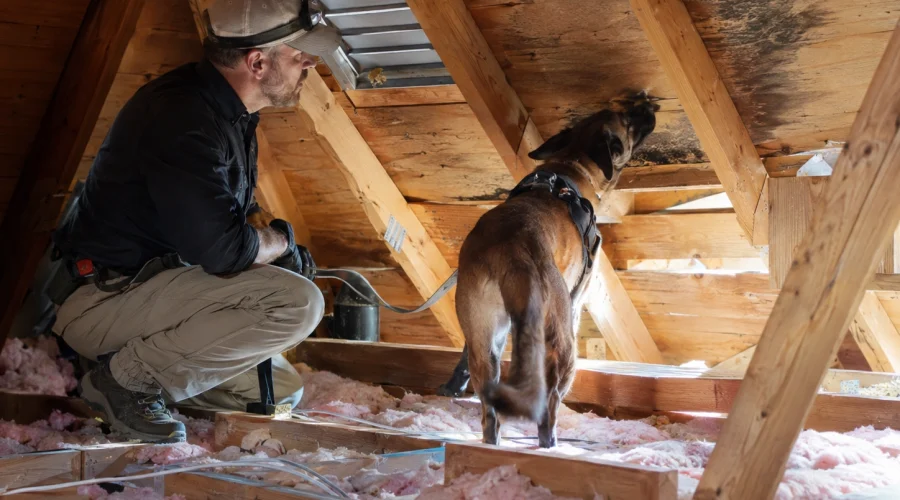
A trained mold detection dog can help locate areas associated with mold odor that may deserve closer inspection.
K9 mold inspection can be especially helpful when the source of a smell or suspected problem is unclear.
Instead of randomly opening walls, moving large sections of insulation, or guessing where mold may be located, a trained dog can help narrow down areas that may need further investigation.
This can give the inspector more information while helping homeowners better understand where concerns may be located.
At K9 Mold Dog Inspection, the goal is to help homeowners get clearer answers about possible mold concerns in their property.
If your attic has experienced roof leaks, poor ventilation, condensation, or unexplained moisture, scheduling an inspection can help you understand what may be happening before the issue becomes more serious.
Small attic moisture problems do not always stay small.
Finding them early can help you make informed decisions about repairs, ventilation, moisture control, and the next steps for protecting your home.
Schedule Professional Mold Detection for Your Attic
You do not have to wait until attic mold becomes obvious.
If you have had roof leaks, ventilation concerns, moisture problems, or unexplained odors, professional mold detection can help give you a clearer picture of what is happening.
Working with experienced mold inspection experts can help uncover problem areas that may not be visible during a quick look around the attic.
Contact K9 Mold Dog Inspection to schedule an inspection and take a closer look at the hidden areas of your home.