You smell something musty. You see a stain on the ceiling. You feel worried but you are not sure where the mold is coming from. Traditional mold inspections can take time. Air samples get sent to a lab. You wait days for results. Meanwhile, the problem may still be spreading.
This is where mold sniffing dogs change the game. So how accurate are they really? Let’s break down the science behind K9 mold detection and why more homeowners are turning to trained detection dogs for answers.
How Mold Sniffing Dogs Detect Mold
Dogs experience the world through scent. Their noses are powerful tools designed for detection.
A trained mold detection dog can identify microbial volatile organic compounds (MVOCs). These are gases released by actively growing mold. Even when mold is hidden behind walls or under flooring, it still releases these odor particles. Humans cannot smell mold at low levels. But dogs can.
A Dog’s Sense of Smell Is Extremely Advanced
A dog’s nose contains up to 300 million scent receptors. Humans have about 5 million. This means dogs can detect odors at parts per trillion levels.
When properly trained, a mold sniffing dog can pinpoint:
- Active mold growth
- The exact location of contamination
- Hidden mold behind drywall
- Mold under carpet or flooring
This ability allows inspectors to narrow down problem areas quickly without tearing into large sections of your home.
How Are Mold Detection Dogs Trained?
Accuracy comes from training. Mold detection dogs are not ordinary pets. They go through structured scent training programs similar to police or military detection dogs.
Step 1: Scent Imprinting
Dogs are introduced to specific mold odors in controlled environments. They learn to associate that scent with a reward. This creates a strong behavioral response. When the dog finds mold, it alerts the handler by sitting, pawing, or signaling in a trained way.
Step 2: Blind Testing
To confirm accuracy, dogs must perform in blind testing environments. In these tests, neither the handler nor the dog knows where mold samples are placed. This reduces human influence and confirms the dog is truly detecting mold, not reading body language.
Step 3: Ongoing Training
Professional mold detection dogs receive continuous training. Regular drills keep their skills sharp and reliable. When handled by experienced inspectors, these dogs become precise detection tools.
How Accurate Are Mold Sniffing Dogs?
Studies and field results show properly trained mold detection dogs can reach accuracy rates above 90 percent in controlled environments.
However, accuracy depends on three factors:
- Quality of training
- Experience of the handler
- Environmental conditions
In real-world situations, mold sniffing dogs often outperform basic air sampling because they locate the exact source instead of just measuring airborne spores.
Air tests can tell you mold spores are present. Mold dogs can tell you where active growth exists. That difference matters.
Mold Sniffing Dogs vs. Traditional Mold Testing
Homeowners often ask which method is better. The answer depends on your goal.
Air Testing
Air samples measure mold spores in the air. These samples are sent to a lab. Results can take days.
Limitations:
- Spores may not be airborne at time of testing
- Cannot pinpoint exact source
- May miss hidden mold behind walls
Surface Testing
Swab tests collect samples from visible areas.
Limitations:
- Only tests visible spots
- Cannot detect hidden growth
Mold Sniffing Dog Inspection
A mold detection dog actively searches for the source of live mold growth.
Benefits:
- Immediate results
- Pinpoints exact location
- Non-invasive
- Reduces unnecessary demolition
For homeowners and business owners, this often saves time and money.
Why Speed and Precision Matter
Mold spreads quickly when moisture is present. The longer it grows, the more damage it causes.
Structural damage can include:
- Soft drywall
- Warped flooring
- Damaged insulation
- Wood rot
Health risks may include:
- Coughing
- Sinus irritation
- Headaches
- Allergy symptoms
If inspectors guess at the location, they may open large sections of walls to find the source.
When Should You Consider a Mold Sniffing Dog Inspection?
You may benefit from K9 mold detection if you notice:
- Persistent musty odors
- Water damage or flooding history
- Roof leaks
- Plumbing leaks
- Recent remodeling
- Health symptoms without clear cause
Mold sniffing dogs are also helpful during:
- Real estate transactions
- Pre-purchase inspections
- Post-remediation clearance checks
- Commercial building concerns
Business owners often choose K9 inspections because they are fast and minimally disruptive. Offices can remain operational during most inspections. A mold sniffing dog narrows the target area. This limits destruction and reduces repair costs. Precision protects your property.
Are Mold Sniffing Dogs Safe Indoors?
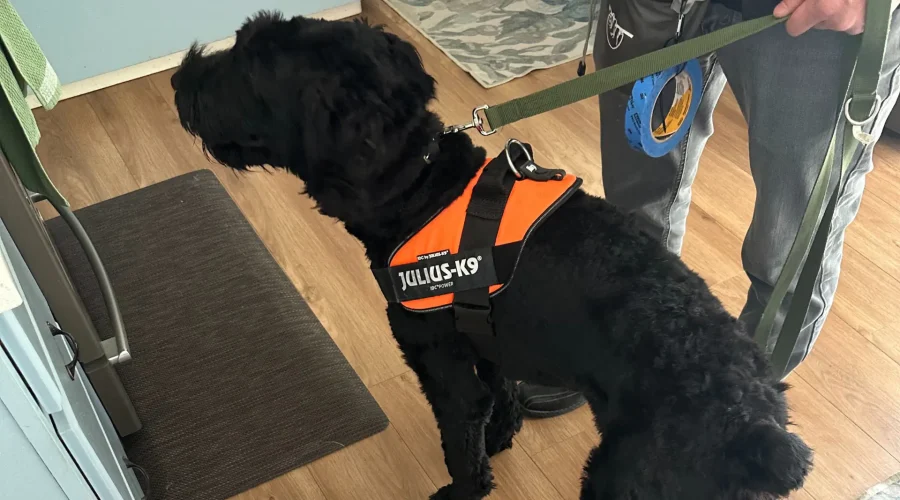
Yes. Mold detection dogs are trained to work calmly inside homes and businesses. They do not scratch walls or cause damage. They simply move through the space and alert when they detect active mold.
Handlers guide them carefully through:
- Bedrooms
- Offices
- Basements
- Crawlspaces
- Commercial buildings
The process is clean and controlled.
What Mold Sniffing Dogs Cannot Do
It is important to understand limitations.
Mold sniffing dogs:
- Detect active mold growth
- Identify location
They do not:
- Identify mold species
- Provide lab analysis
- Replace full remediation plans
In some cases, inspectors may combine K9 detection with lab testing for a complete assessment.
The goal is accuracy and clarity.
The Bottom Line: Are Mold Sniffing Dogs Worth It?
Yes, when handled by trained professionals, mold sniffing dogs are highly accurate tools for locating hidden mold.
They:
- Provide fast answers
- Reduce unnecessary damage
- Save time
- Help guide proper remediation
For homeowners, that means less guesswork and lower repair costs. For business owners, it means protecting employees, customers, and property value.
If you suspect mold but cannot see the source, waiting only allows the problem to grow. A mold sniffing dog inspection offers a smart, science-backed solution.
Instead of tearing into walls blindly or waiting for lab results, you get immediate insight into where mold is hiding. That level of precision makes all the difference.