You smell something musty every time you enter a room. There may be an old water stain nearby, but you cannot see any mold. The wall looks normal, the flooring feels dry, and you are not sure what to do next.
This is a common problem for homeowners. Mold does not always grow where it can be easily seen. It may hide behind drywall, beneath flooring, around plumbing lines, or inside other closed spaces.
Opening every wall to search for it would be messy, costly, and unnecessary. A trained mold detection dog gives your mold inspector another way to narrow down the source before major repair work begins.
Why Hidden Mold Is So Difficult to Locate
Mold needs moisture and a food source to grow. Many building materials, including drywall paper, wood, insulation, and carpet padding, can provide the right conditions after they become damp.
The moisture may come from:
- A slow plumbing leak
- A damaged roof
- Water entering around a window
- An overflowing appliance
- Indoor condensation
- Past flooding
- High humidity
The original water problem may stop, but moisture can remain trapped inside the structure. Mold can then grow in an area that homeowners cannot reach or see.
A visual inspection may reveal stains, peeling paint, warped materials, or other clues. Moisture meters and thermal imaging may also help identify unusual conditions. However, these tools do not always show the precise location of hidden mold.
Air and surface samples can provide useful information as part of mold testing, but a sample taken in one location may not tell the inspector exactly where concealed growth is hiding. K9 Mold Dog Inspection uses its trained detection dog, Frankie, to search areas such as walls, floors, attics, basements, and HVAC spaces.
How a Mold Detection Dog Performs a Search
A mold detection dog is trained to recognize specific odors linked to mold. The process is similar to the way working dogs are trained to locate other target scents.
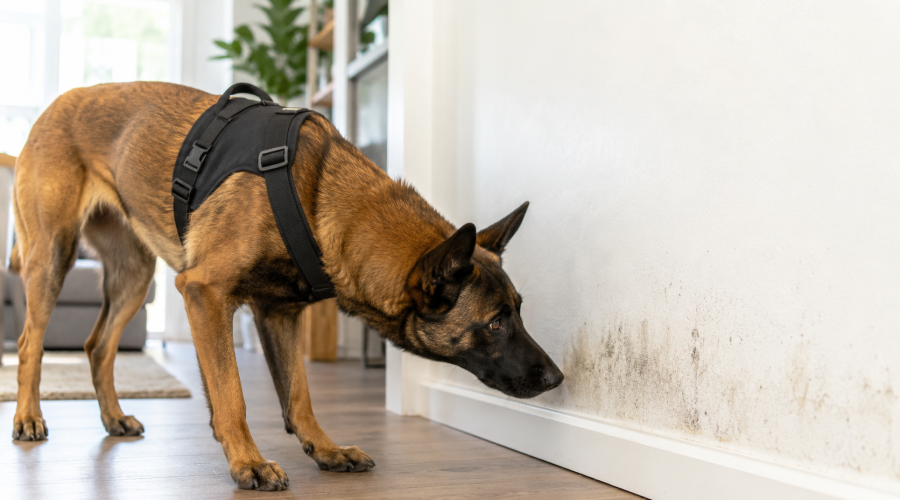
During an inspection, the handler guides the dog through the property in an organized pattern. The dog sniffs along walls, flooring, cabinets, vents, and other areas where hidden growth may be present.
When the dog identifies the target odor, it gives a trained alert. The handler records the location so it can receive closer attention.
The goal is not for the dog to diagnose the property or replace every other inspection method. Instead, the dog helps the inspector focus on a smaller, more specific area.
For example, a homeowner may believe an entire bedroom wall contains mold. A K9 search may identify one suspicious section near a window or plumbing line. The inspector can then recommend a more focused investigation instead of removing drywall across the entire room.
Frankie has been trained to locate mold odors in concealed areas, including behind drywall and under flooring. This approach can help narrow down problem locations without immediately opening large sections of the building.
Why K9 Mold Detection Is Less Invasive
Traditional exploratory work may involve cutting test holes, lifting flooring, removing trim, or opening cabinets. Sometimes this work is necessary, but it should be focused whenever possible.
K9-assisted mold detection can reduce guesswork by helping the inspector identify areas that deserve further evaluation.
This may offer several benefits:
- Less unnecessary damage to walls and floors
- Faster searches of larger properties
- More focused sampling or investigation
- Clearer information before remediation
- Fewer areas opened based only on suspicion
- A better starting point for repair planning
Imagine that you smell mold in a hallway with four nearby rooms. Without a clear lead, someone might recommend opening several walls. A trained dog may alert near one bathroom wall where a slow pipe leak has affected the materials behind it.
That alert does not automatically prove the size or type of the problem. However, it gives the inspection team a focused place to investigate.
K9 Mold Dog Inspection describes its service as a fast, non-invasive method that helps homeowners find hidden problem areas without relying on guesswork alone.
What Happens After the Dog Alerts?
A K9 alert is an important finding, but it is one part of the inspection process. The handler and inspector will review the location, surrounding conditions, and any signs of moisture or damage.
Depending on the property, the next steps may include:
- Checking the area with a moisture meter
- Looking for an active leak
- Reviewing nearby plumbing or roofing
- Performing targeted mold testing
- Inspecting the opposite side of the wall
- Recommending limited access to confirm growth
- Documenting the location for a remediation company
Targeted testing can help determine whether mold is present in a suspicious area. Limited removal may still be needed to confirm the full amount of damage, but it can be directed toward the location that produced the strongest evidence.
This is much different from tearing apart walls at random.
A good mold inspector should also look for the moisture source. Removing mold without correcting the leak, condensation, or humidity problem may allow growth to return.
When Should You Call Mold Inspection Experts?
You do not have to wait until you see a large patch of mold. Early action may help limit damage and give you more repair options.
Consider contacting mold inspection experts when:
- You notice a musty or earthy odor
- Your home has had a roof or plumbing leak
- Water stains keep coming back
- Paint or wallpaper begins to bubble
- Floors start buckling or feeling soft
- Mold returns after surface cleaning
- You are buying a home with past water damage
- You need clearer information before remediation
A K9 inspection may be especially helpful when you strongly suspect mold but cannot find its source. It may also help when several areas could be responsible and you want to avoid unnecessary demolition.
Get Clear Answers Without Unnecessary Damage
Finding hidden mold should not begin with tearing open every wall in your home. It should begin with a careful inspection, the right tools, and a focused plan.
A trained mold detection dog can search areas that are difficult to inspect with the eyes alone. When the dog alerts, the inspector can examine that location more closely and recommend targeted testing or further investigation.
K9 Mold Dog Inspection combines professional inspection methods with Frankie’s trained sense of smell to help locate hidden mold in homes and businesses. The service is designed to provide fast, independent information so property owners can make informed decisions about their next step.
Do you smell a musty odor or suspect mold behind a wall? Call K9 Mold Dog Inspection at (435) 740-0497 to schedule a professional inspection and get the clear answers you need.