
Why Early Mold Detection Matters
Mold doesn’t wait around. It spreads fast, especially in areas with moisture, leaks, or poor ventilation. Catching it early means you avoid major repairs, hidden damage, and long-term exposure that can impact your health.
Most homeowners and business owners don’t recognize mold until it becomes visible, but mold usually starts growing long before you see it. That’s why understanding early signs is your best defense.
Early detection can:
- Stop mold before it spreads through walls or HVAC systems.
- Prevent expensive structural damage.
- Limit health risks like allergies, coughing, and breathing problems.
- Protect children, employees, and customers from unsafe indoor air quality.
If something feels “off” in your home or workplace, trust that instinct. Mold leaves clues long before it shows its face.
Hidden Mold Symptoms You Should Never Ignore
Mold tries to stay hidden, but the signs are always there if you know where to look.
Musty or Earthy Odors
That “old basement” smell is one of the strongest red flags. Even if you can’t see visible growth, a lingering musty odor is often the first sign mold is growing behind the scenes.
Water Spots, Discoloration & Staining
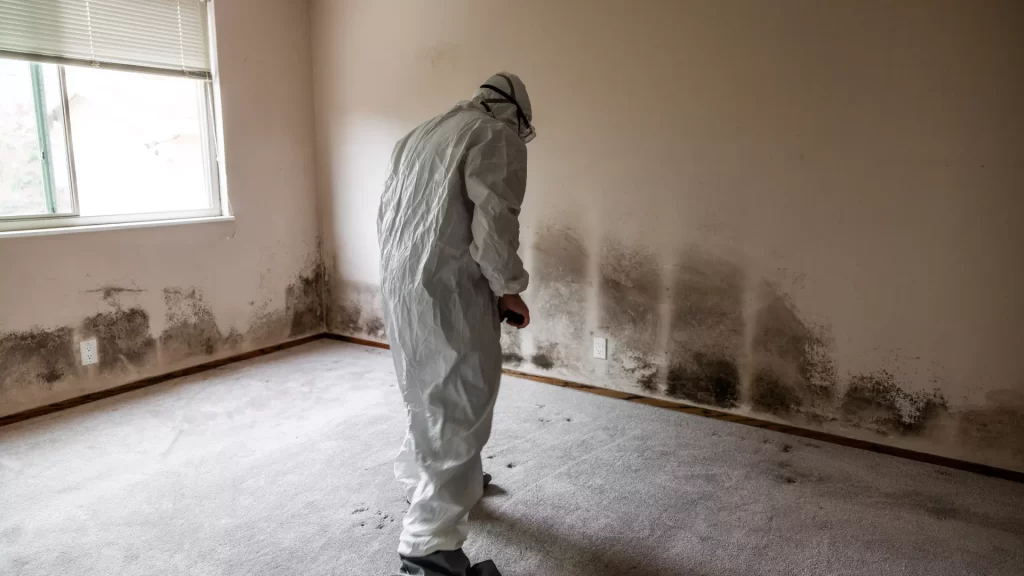
If walls, ceilings, or floors show strange dark spots, patches, or discoloration, that could be moisture soaking in and moisture attracts mold like a magnet.
Typical locations:
- Around windows
- Beneath sinks
- On bathroom ceilings
- Behind appliances
- Along baseboards
Increased Allergies or Respiratory Issues
If you or someone in your building starts experiencing:
- Sneezing
- Coughing
- Itchy eyes
- Headaches
- Difficulty breathing
…especially when indoors, mold may be the cause.
Soft Walls, Peeling Paint & Warping
Moisture behind walls can cause bubbling paint, warped trim, or drywall that feels soft to the touch. Even if you don’t see mold, the moisture that caused it is already working its way inside.
Common Places Mold Begins to Grow
Knowing where mold often hides helps you catch problems faster.
Bathrooms & Laundry Rooms
High humidity makes these rooms prime spots. Check behind toilets, around tubs, behind washers, and near floor drains.
Basements & Crawl Spaces
Dark + damp + limited airflow = mold paradise. Look for condensation, water intrusion, or decaying wood.
Kitchens
The hidden spaces; behind refrigerators, under sinks, and near dishwashers are mold-friendly because they combine water and heat.
Attics & HVAC Systems
A leaking roof or poor insulation can introduce moisture that spreads mold through your ventilation system.
Around Windows & Doors
If seals are weak or weatherstripping is worn, moisture sneaks in and mold follows.
When a DIY Fix Isn’t Enough
There’s a point where “clean it with bleach” won’t cut it. Mold grows fast, spreads deep, and often hides behind materials where you can’t reach.
Large Areas of Mold Growth
If the patch is bigger than 10 square feet, the EPA recommends calling a trained inspector or remediation specialist.
Recurring Mold That Keeps Coming Back
If mold returns after cleaning, that means the source of moisture hasn’t been fixed and you need a professional to identify what you can’t see.
Mold in HVAC, Walls, or Ceilings
Once mold reaches hidden areas, DIY cleaning only removes the surface problem, not the root.
Mold After Flooding, Leaks, or Storms
Floods saturate materials deep inside the structure. Only a professional inspection can confirm how far the damage goes.
Benefits of Hiring a Professional Mold Inspector
A professional mold inspection is more than someone looking around with a flashlight. It’s a full evaluation of your building’s air, surfaces, and hidden spaces.
Accurate Identification
Not all mold is dangerous, but some types are. A professional can tell you exactly what you’re dealing with.
Advanced Testing Tools
Inspectors use:
- Moisture meters
- Infrared cameras
- Air quality tests
- Swab samples
These tools help find mold behind walls, under floors, and inside ducts places homeowners can’t access safely.
Clear Solutions & Prevention Plans
A good mold inspector explains:
- The source of moisture
- The type of mold
- How far it has spread
- The safest way to remove it
- How to prevent it from coming back
Peace of Mind
You get clarity, safety, and a plan instead of guessing and hoping for the best.
How to Choose the Right Mold Inspector
Not all inspectors offer the same quality. You want someone experienced, qualified, and trustworthy.
Licensing & Certifications
Look for companies certified by:
- IICRC (Institute of Inspection Cleaning and Restoration Certification)
- NORMI
- ACAC
No Conflict of Interest
The best mold inspectors do not offer mold removal services. This avoids upselling or exaggerated findings.
Detailed Inspection Reports
A solid inspector provides documentation with:
- Photos
- Test results
- Moisture readings
- A step-by-step remediation plan
Clear Communication
If they can’t explain the findings in simple terms, they may not be the right fit.
Catching mold early saves you money, protects your home or business, and keeps everyone inside safe. Trust your instincts if something smells, looks, or feels wrong, mold may already be growing.
A professional mold inspector gives you answers you can rely on and helps you stay ahead of a problem that only gets worse with time.