A leaking roof or broken pipe can cause more than a wet floor or stained ceiling. Even after the visible water is gone, moisture may remain trapped behind walls, beneath flooring, or inside insulation. That hidden moisture can create the right conditions for mold to grow.
Not every leak leads to a serious mold problem. However, it is important to know what signs to watch for and when professional mold testing may be the safest next step.
The sooner you locate hidden moisture, the easier it may be to protect your home and avoid unnecessary repairs.
How Quickly Can Mold Grow After a Water Leak?
Mold needs moisture, a food source, and the right temperature to grow. Homes contain many materials that can support mold growth, including drywall, wood, insulation, carpet, and dust.
After a roof leak or plumbing problem, these materials may stay damp even when the surface feels dry. Water can move through small spaces and collect in areas that are difficult to see.
The risk may be higher when:
- Water remained in the area for an extended time
- Drywall, carpet, or insulation became soaked
- The leak happened inside a wall or ceiling
- Fans and dehumidifiers were not used quickly
- The home has poor ventilation
- Humidity remains high
- The same area has leaked more than once
A fast cleanup can reduce the risk, but it does not always prove that every wet area has been found. Professional mold detection can help locate suspicious areas that may need closer inspection.
When Should You Schedule Mold Testing?
You may not need mold testing after every small spill or quickly repaired leak. For example, water from a minor sink overflow that is cleaned and dried right away may not create a lasting problem.
Testing becomes more important when water may have reached hidden building materials or when warning signs appear after the repair.
Consider calling a mold inspector when:
- The leak was not discovered right away
- Water entered a wall, ceiling, attic, or crawl space
- Carpet padding or flooring stayed wet
- Drywall feels soft, swollen, or damaged
- You notice a musty odor
- Stains continue to spread
- Paint begins bubbling or peeling
- Mold appears after the area was cleaned
- A family member notices irritation that improves away from the property
- You are buying a home with signs of past water damage
Testing can provide more information about the property and help determine whether further action is needed.
It is especially helpful when there is uncertainty. Guessing can lead homeowners to either ignore a real problem or pay for repairs that are not focused on the correct area.
Warning Signs of Hidden Mold After a Leak
Visible mold is only one possible sign. Mold may grow behind a surface before it appears in the room.
After a roof or plumbing leak, watch for these warning signs:
- A damp, earthy, or musty smell
- Brown, yellow, black, or green stains
- Warped flooring or baseboards
- Soft drywall
- Cracked or bubbling paint
- Loose wallpaper
- Swollen cabinets
- Rust around vents or fixtures
- Condensation that keeps returning
- Increased indoor humidity
A musty odor can be one of the strongest clues because mold may produce an odor even when it is hidden.
Do not immediately cut into a wall or ceiling to search for the source. Opening a damaged area without the right plan may spread dust and other particles through the room. A trained mold inspector can help narrow down the location before materials are removed.
Roof Leaks and Plumbing Leaks Create Different Risks
Roof leaks and plumbing problems can both lead to mold, but they often affect different parts of the home.
Mold Risks After a Roof Leak
Roof leaks may allow water to enter:
- Attic insulation
- Roof decking
- Ceiling drywall
- Wall cavities
- Light fixtures
- Window frames
- Upper-floor flooring
A roof leak may travel away from the original entry point. The stain on the ceiling may not be directly below the damaged part of the roof.
Because attic and ceiling spaces are dark and difficult to access, moisture can remain unnoticed. Mold inspection experts can examine these areas and help determine whether further testing is needed.
Mold Risks After a Plumbing Problem
Plumbing leaks often affect:
- The area beneath sinks
- Bathroom walls
- Kitchen cabinets
- Floors around toilets
- Spaces behind showers and bathtubs
- Laundry rooms
- Water heater closets
- Walls containing supply or drain lines
A slow plumbing leak can be especially difficult to catch. It may release a small amount of water each day without creating a large puddle.
By the time the leak becomes visible, nearby wood, drywall, or flooring may already be damaged.
What Happens During a Professional Mold Inspection?
A professional inspection is designed to gather information before major repairs begin.
The process may include:
- Reviewing the history of the leak
- Checking visible signs of water damage
- Inspecting nearby rooms and surfaces
- Measuring moisture in building materials
- Looking for humidity or ventilation problems
- Using targeted mold detection
- Collecting samples when appropriate
- Explaining the findings and recommended next steps
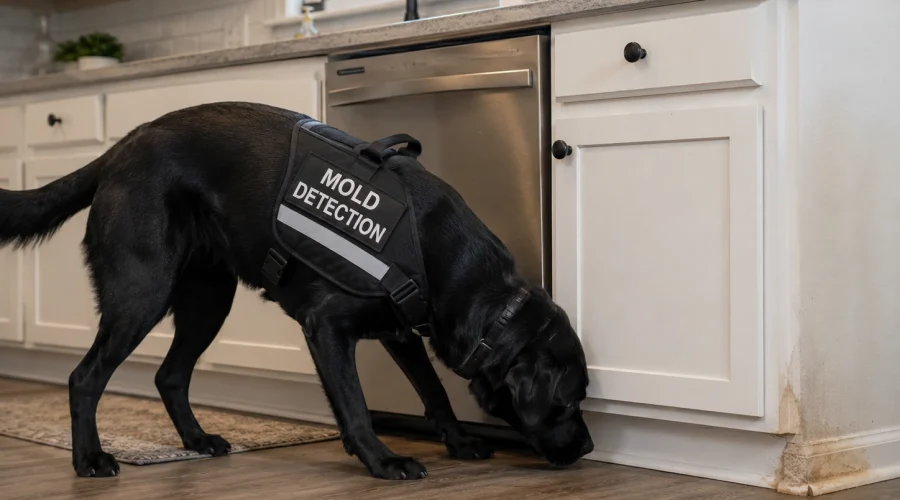
A trained mold detection dog may also help identify mold odor in hidden areas. This can help narrow the search and reduce the need to open large sections of walls or flooring without a clear reason.
K9-assisted detection does not replace every inspection tool. Instead, it can be used with moisture readings, visual checks, and professional testing to build a clearer picture of the property.
Why Independent Testing Matters
Some companies inspect for mold and also sell mold removal services. This can make homeowners wonder whether the recommended work is truly necessary.
An independent inspection helps separate the testing process from the cleanup process. The inspector’s job is to identify possible concerns and provide clear findings.
This gives you information you can use when speaking with a restoration company, plumber, roofer, contractor, landlord, buyer, or insurance representative.
The goal is not to frighten you. The goal is to help you make a smart decision based on the actual condition of the property.
What Should You Do After Discovering a Leak?
After a roof leak or plumbing problem, take these steps:
- Stop the source of the water.
- Remove standing water when it is safe.
- Move furniture and belongings away from the wet area.
- Use fans and dehumidifiers if appropriate.
- Document damage with photos.
- Contact the needed plumber, roofer, or restoration professional.
- Watch for odors, staining, or new damage.
- Schedule an inspection when hidden moisture or mold is suspected.
Avoid painting over stains or sealing damaged materials before the area is fully inspected and dried. Covering the surface may hide the warning sign without solving the problem.
Get Clear Answers After Water Damage
A roof leak or plumbing problem does not always mean your home has mold. However, ignoring hidden moisture can allow a small issue to turn into a much larger repair.
Professional mold testing can help determine whether mold is present, while targeted mold detection can help locate suspicious areas behind walls, beneath floors, or inside other concealed spaces.
K9 Mold Dog Inspection provides non-invasive inspections to help property owners understand what may be happening inside their homes. With guidance from experienced mold inspection experts, you can move forward with more confidence and less guesswork.
If your home recently had a roof leak, broken pipe, overflowing appliance, or other water problem, schedule an inspection before hidden moisture has more time to spread.