Your HVAC system is designed to keep your home comfortable. It moves heated or cooled air through vents and ducts so each room stays at the right temperature. But when moisture and mold enter the system, your HVAC equipment may help move mold particles through different parts of your home.
That does not always mean mold is growing inside the HVAC system itself. Sometimes the real problem starts somewhere else, such as near a leaking drain line, damp insulation, an attic, a crawl space, or an area around the air handler.
Because HVAC systems connect many areas of the home, possible mold problems should not be ignored. Professional mold detection can help identify where the issue may be coming from and whether more testing or cleanup is needed.
How Mold Can Develop Around an HVAC System
Mold needs moisture to grow. HVAC systems naturally deal with moisture because air conditioning removes humidity from indoor air.
Normally, this moisture drains away safely. Problems begin when water collects where it should not.
A clogged drain line may cause water to back up. A damaged drain pan may allow moisture to leak into nearby materials. Poor insulation around ductwork can also cause condensation to form.
Once materials stay damp long enough, mold may begin growing on or around surfaces such as:
- Duct insulation
- Wood framing
- Drywall
- Drain pans
- Air handler cabinets
- Areas around vents
- Attic insulation near HVAC equipment
- Damp flooring or building materials
The tricky part is that some of these areas are difficult for homeowners to see.
That is why a qualified mold inspector can be helpful when you notice signs of moisture or suspect something is happening behind walls, above ceilings, or near your HVAC equipment.
Can Your HVAC System Actually Spread Mold?
An HVAC system moves air throughout the house. If mold particles are already present near an air intake or another part of the system, airflow may carry those particles into other areas.
This is one reason homeowners sometimes notice a musty smell in several rooms instead of one specific location.
For example, mold may be growing near an air handler in the attic. When the system runs, air movement can disturb particles in the surrounding area. Those particles may then move through nearby spaces or enter areas connected to the ventilation system.
However, a musty smell coming from a vent does not automatically mean the entire duct system is filled with mold.
There may be a smaller moisture problem nearby.
Proper mold detection focuses on finding the source instead of simply assuming the worst. Identifying where moisture is entering the home can make it easier to determine what should happen next.
Signs It May Be Time to Call a Mold Inspector
Homeowners often wait until mold is clearly visible before asking for help. Unfortunately, HVAC-related moisture problems can develop in areas that are hidden from view.
Certain warning signs may be worth investigating.
You may want to contact a professional mold inspector if you notice:
- A strong musty smell when the HVAC system starts
- Water stains near vents or ceiling registers
- Condensation forming around ductwork
- Frequent moisture near the air handler
- A drain pan that keeps filling with water
- Dark or unusual spots near vents
- Damp insulation around HVAC equipment
- A recent HVAC leak
- Mold returning after cleaning the same area
- A musty odor that appears in several rooms
None of these signs automatically proves there is a major mold problem. They simply tell you that further investigation may be useful.
The goal is to find the moisture source early before a smaller issue has more time to spread.
Why Professional Mold Detection Can Be More Effective
Finding mold is not always as simple as looking around with a flashlight.
Many homes have spaces that are difficult to inspect. Mold may be hidden inside wall cavities, underneath materials, around ductwork, or in other areas that cannot be easily reached.
This is where experienced mold inspection experts can provide added value.
A professional inspection can help narrow down areas of concern and identify patterns that homeowners may overlook.
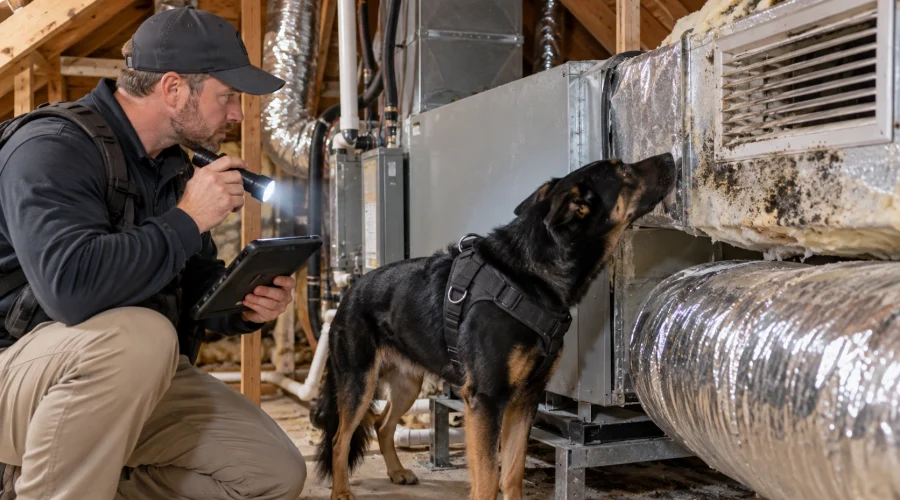
K9 mold detection adds another tool to the process. A properly trained mold detection dog can search areas of a property using scent and may help identify locations that deserve closer attention.
This can be especially useful in larger homes or properties where the source of the problem is not obvious.
A targeted approach can help homeowners avoid unnecessary guessing. Instead of opening walls at random or assuming every vent has a problem, an inspection can help focus attention on specific areas.
What to Do If You Suspect HVAC Related Mold
If you notice a strange smell or moisture near your HVAC system, start by looking for obvious water problems.
Check around the air handler, vents, and visible ductwork. Look for standing water, condensation, staining, or damp materials.
You should also consider having your HVAC system inspected if it is leaking or not draining correctly. Fixing the moisture source is an important part of preventing mold from returning.
Cleaning a visible area without fixing the leak will usually not solve the underlying problem.
A professional mold inspector can help determine whether there are additional areas that should be investigated.
If mold is confirmed, the next steps may depend on where it is located and how much material has been affected.
The main goal is simple: find the moisture, identify the affected area, and address the problem before it becomes larger.
Protect Your Home With K9 Mold Dog Inspection
HVAC systems play an important role in your home’s comfort, but moisture problems around them can sometimes create ideal conditions for mold.
Musty smells, water stains, condensation, and recurring moisture should not be ignored.
Professional mold detection can help uncover hidden areas of concern and give homeowners a clearer picture of what may be happening inside the property.
At K9 Mold Dog Inspection, trained detection dogs help locate areas where mold may be present so homeowners can make informed decisions about their next steps.
If you suspect mold near your HVAC system or anywhere else in your home, working with experienced mold inspection experts can help you stop guessing and start finding answers.
Schedule an inspection with K9 Mold Dog Inspection and take the first step toward locating hidden mold concerns before they have more time to spread.