Many homeowners look for mold on walls, ceilings, and around sinks. But one area often gets missed is the floor.
Yes, mold can grow under flooring. It can hide under carpet, wood, laminate, vinyl, and even tile when moisture gets trapped below the surface. Because it is hidden, many people do not notice the problem until the damage gets worse.
This is one reason hidden mold can be so frustrating. Your floors may look fine from the top, but moisture underneath can create the perfect place for mold to grow.
At K9 Mold Dog Inspection, we help homeowners locate hidden mold issues, including mold that may be growing under flooring. Knowing the warning signs early can help you act before the problem spreads further.
Why Mold Can Grow Under Flooring
Mold needs moisture, time, and a surface to grow on. Under flooring, these conditions can happen more easily than many people think.
A small leak, water spill, flood, or high humidity can allow moisture to soak below the floor surface. Once water gets trapped, it may not dry fully. That hidden damp area can become a good place for mold growth.
Common causes of mold under flooring include:
- Plumbing leaks
- Appliance leaks
- Flooding
- Roof leaks that travel downward
- Water from bathrooms or kitchens
- High humidity
- Poor ventilation
- Wet carpet padding
- Slab moisture issues
Even a one-time water event can lead to a mold problem if the area was not dried properly.
Some homeowners replace the top flooring but do not realize the subfloor or padding underneath is still wet. When that happens, mold may keep growing out of sight.
What Types of Flooring Can Hide Mold?
Mold can grow under many kinds of flooring. Some materials are more likely to trap moisture than others.
Carpet is one of the biggest concerns. Water can soak into the carpet, then into the padding below. If it stays wet, mold can begin growing underneath.
Wood and laminate floors can also hide moisture. If water gets between seams or along the edges, it can seep below the flooring. Over time, the boards may warp, lift, or buckle.
Vinyl flooring may look like it protects the floor, but moisture can still become trapped underneath it. Tile flooring can hide problems too, especially if water gets into cracked grout or around the edges.
The floor type may be different, but the real issue is the same: moisture under the surface can create a hidden mold problem.
Signs Mold May Be Growing Under Your Floor
Mold under flooring is not always easy to see, but there are warning signs that may point to a hidden problem.
One of the most common signs is a musty smell. If one room keeps smelling damp or earthy even after cleaning, mold could be present below the floor.
You may also notice physical changes in the flooring itself.
Watch for these signs:
- A musty or stale odor
- Warped or buckling floorboards
- Soft spots in the floor
- Stained carpet or flooring
- Damp carpet padding
- Loose tiles
- Peeling vinyl
- A history of leaks or flooding
- A room that feels humid all the time
In some cases, there may be no visible signs at all. That is what makes hidden mold so hard to find without professional help.
If your home had water damage in the past, or if you suspect a leak happened under the floor, it is smart to investigate sooner rather than later.
How Mold Detection Dogs Help Find Hidden Mold
When mold is hidden under flooring, a visual inspection alone may not be enough. That is where mold detection dogs can be helpful.
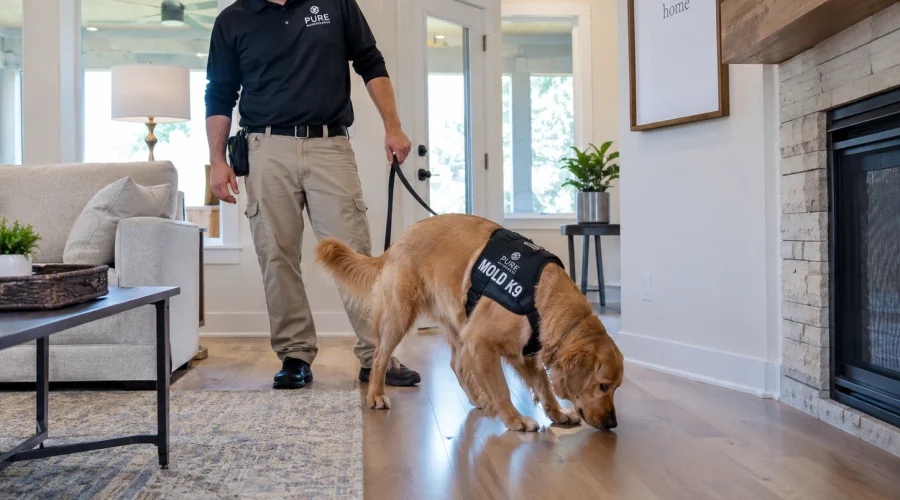
Trained mold detection dogs use their strong sense of smell to locate mold odors. During an inspection, the dog moves through the home and alerts the handler to areas where mold scent may be present.
This can help identify possible problem areas under:
- Carpet
- Laminate flooring
- Hardwood flooring
- Vinyl flooring
- Tile flooring
- Baseboards and subfloors
Instead of guessing where the problem might be, a mold detection dog can help narrow down the location. This gives homeowners and inspectors a more focused starting point for the next steps.
That matters because pulling up large sections of flooring without a clear reason can be messy, expensive, and stressful.
A targeted inspection can help reduce unnecessary damage while giving you better information about where the issue may be hiding.
Why Acting Early Matters
Hidden mold problems often get worse with time. The longer moisture stays trapped under flooring, the more chance mold has to spread.
The flooring itself may become damaged. The subfloor may also be affected. In some cases, baseboards, nearby drywall, or cabinets may start taking on moisture too.
The earlier you find the source, the easier it may be to understand what needs to be fixed.
If mold is found, the next step is not just removing the mold. It is also finding the moisture source that caused it in the first place. If the leak or moisture problem is not corrected, the mold may return.
Here are a few times when you should consider scheduling an inspection:
- After a plumbing leak
- After a flood or water damage event
- When floors feel soft or uneven
- When there is a strong musty smell
- After an appliance leak
- If you suspect past moisture was never fully dried
- When flooring starts warping for no clear reason
At K9 Mold Dog Inspection, we help homeowners get clearer answers when hidden mold may be present. If you think mold could be growing under your flooring, a professional inspection can help you locate the issue before the damage gets worse.