A small water leak may not seem like a big deal at first. Maybe there is a slow drip under the sink, a tiny stain on the ceiling, or a little moisture around a window. It can be easy to think the problem can wait.
The trouble is that even a small amount of water can create the right conditions for mold.
If moisture reaches drywall, wood, insulation, flooring, or other building materials and stays there, mold may begin growing in places you cannot easily see.
That is why homeowners should take even small leaks seriously. Finding the source early and checking for hidden moisture can help prevent a much larger problem later.
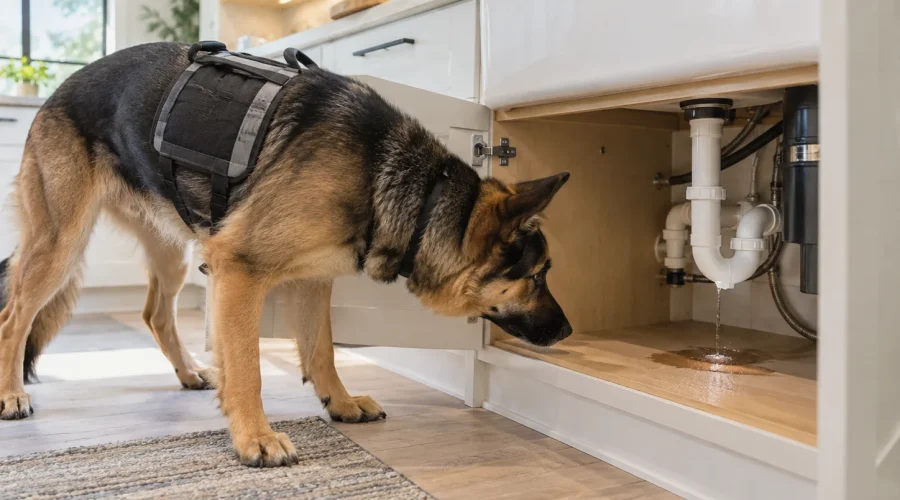
At K9 Mold Dog Inspection, trained mold detection dogs can help locate areas where mold odor may be present, especially when the problem is hidden behind walls, under flooring, or inside other hard to reach spaces.
Why Small Leaks Can Cause Bigger Problems
Mold needs moisture to grow.
A large flood can obviously create mold concerns, but small leaks can be just as frustrating because they often go unnoticed for longer periods of time.
A pipe may drip slowly behind a wall. A dishwasher connection may leak a little at a time. Water may enter around a window every time it rains.
Because the leak is small, homeowners may not notice it right away.
Over time, that moisture can soak into materials like:
- Drywall
- Wood framing
- Carpet padding
- Cabinets
- Insulation
- Flooring
- Baseboards
Once moisture becomes trapped, the area may stay damp even if the surface looks dry.
That hidden moisture can create an environment where mold may develop.
Signs a Small Leak May Be Causing Mold
Mold problems are not always obvious.
You may never see a large patch of mold on the wall. Instead, the signs can be subtle.
One common warning sign is a musty smell.
If one room has an earthy or damp odor that does not go away, there may be moisture or mold somewhere nearby.
Other signs can include:
- Water stains on ceilings or walls
- Bubbling or peeling paint
- Warped baseboards
- Soft drywall
- Discoloration around cabinets
- Damp flooring
- A recurring wet smell
- Moisture around plumbing fixtures
Sometimes, the leak has already been repaired but the moisture behind the surface was never fully addressed.
That is another reason mold can become difficult to detect.
The visible leak may be gone while the hidden problem remains.
Why Mold Can Be Hard to Find After a Leak
The biggest challenge with small leaks is that the water often travels.
A leak may start in one place but spread behind drywall, under flooring, or along framing.
That means the visible stain may not show the full extent of the problem.
For example, a small plumbing leak behind a bathroom wall may allow water to move downward into the baseboard or flooring below.
By the time you notice something, the moisture may already be affecting a larger area.
This is where a more targeted inspection can be helpful.
Trained mold detection dogs use their sense of smell to identify mold odors.
During an inspection, the dog can move through different parts of the home and alert the handler to areas where mold odor may be strongest.
This may help narrow down places that deserve closer investigation.
It can be especially helpful in areas like:
- Behind walls
- Around cabinets
- Near plumbing
- Under flooring
- Around windows
- Near baseboards
Instead of guessing where the problem might be, the inspection can help focus attention on more specific areas.
Why You Should Check for Mold After Fixing the Leak
Stopping the water is an important first step.
But fixing the leak does not always mean the mold problem is solved.
If moisture remained in the area long enough, mold may have already started growing.
That is why it can be helpful to look beyond the repair itself.
You want to make sure the affected materials have dried properly and that no hidden areas were missed.
A mold inspection can help answer important questions.
Is there still moisture in the wall?
Did the water travel farther than expected?
Is there an area that needs additional testing?
Is there mold odor coming from a hidden location?
Getting answers early can help homeowners avoid bigger repairs later.
Do Not Ignore a Leak Just Because It Looks Small
A small leak today can turn into a much more expensive problem if it is ignored.
The key is acting early.
If you notice a drip, stain, damp smell, or moisture problem, address the water source first.
Then consider whether the surrounding area should be inspected.
This is especially important if the leak may have been happening for a while or if the water reached materials you cannot easily see.
At K9 Mold Dog Inspection, we help homeowners locate areas of concern using trained mold detection dogs.
The goal is to help identify hidden mold concerns before unnecessary damage, repairs, or larger remediation work becomes necessary.
If you recently had a leak or suspect moisture may be hiding somewhere in your home, scheduling an inspection can give you a clearer picture of what may be happening behind the surface.
Finding a small problem early can make a big difference.