Mold does not always begin with a broken pipe or a flooded room. Sometimes, the problem starts quietly with too much moisture in the air.
High humidity can create the damp conditions mold needs to grow. The harder part is that the mold may develop in places you cannot easily see, such as behind walls, under flooring, inside cabinets, or near HVAC systems.
Your home may look clean while hidden moisture is slowly creating a problem.
At K9 Mold Dog Inspection, trained mold detection dogs can help locate areas where mold may be present, including places that are difficult to inspect with your eyes alone.
Understanding how humidity affects your home can help you recognize problems earlier and know when it may be time for a professional mold inspection.
How High Humidity Can Lead to Mold Growth
Humidity is the amount of moisture in the air.
When indoor humidity stays high for long periods, moisture can collect on surfaces throughout the home. This may happen on windows, walls, pipes, vents, ceilings, and other cooler areas.
Even if you never see standing water, that extra moisture can create an environment where mold can grow.
Bathrooms, kitchens, laundry rooms, basements, and areas around HVAC equipment may be more likely to experience humidity problems. Poor ventilation can make the situation worse because moist air remains trapped inside instead of moving outside.
Mold growth can also happen in less obvious places.
For example, humid air may enter a wall cavity and collect on a cooler surface behind the drywall. The outside of the wall may still look perfectly normal.
That means mold may begin growing long before the homeowner realizes there is a problem.
Where Hidden Mold May Develop
Mold tends to grow where moisture and organic materials are available.
Many parts of a home provide both.
Drywall, wood, carpet padding, insulation, and other building materials can hold moisture. If humidity remains high, these materials may stay damp enough for mold to grow.
Some common areas where hidden mold may develop include:
- Behind drywall
- Under carpet or flooring
- Around windows and doors
- Inside closets
- Behind cabinets
- Near plumbing fixtures
- Around HVAC vents
- Inside attic spaces
- Around air conditioning equipment
- Behind furniture placed against exterior walls
These areas are not always easy to inspect.
You may notice a musty smell before you ever see visible mold. In other situations, there may be no obvious warning sign at all.
That is why understanding your home’s moisture levels can be an important part of preventing larger mold problems.
Signs Your Home May Have Too Much Humidity
Your home may give you small warning signs when indoor humidity is too high.
One common sign is condensation on windows. You may notice water droplets forming on the glass, especially during certain times of the day.
A room may also feel damp or sticky even when the temperature feels comfortable.
Other possible signs include:
- Musty or earthy odors
- Condensation on windows or pipes
- Damp feeling rooms
- Peeling or bubbling paint
- Warped wood
- Moisture stains
- Increased moisture around vents
- Damp closets
- A basement that always feels humid
These signs do not automatically mean you have a mold problem. However, they may tell you that conditions are present that could support mold growth.
A simple humidity meter can also help homeowners watch indoor moisture levels.
Keeping humidity under control can lower the chance of mold growth, but it cannot tell you whether mold is already hiding somewhere inside the home.
That is where a more detailed inspection may be helpful.
How Mold Detection Dogs Help Find Hidden Problems
Finding hidden mold can be difficult because many problem areas are covered by walls, floors, cabinets, or other building materials.
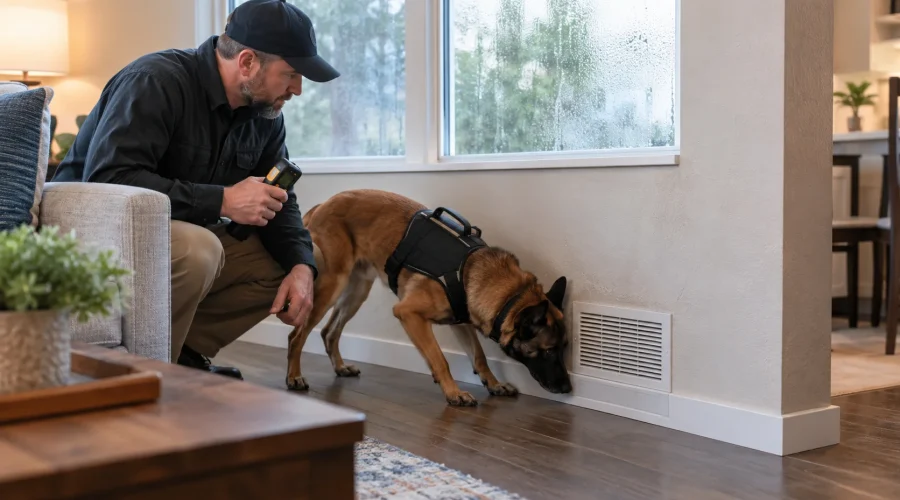
A trained mold detection dog uses its powerful sense of smell to identify mold odors.
During an inspection, the dog can move through different areas of the home and alert its handler when it detects a scent associated with mold.
This can help narrow down areas that may need a closer look.
Instead of guessing where mold might be hiding, the inspection can become more focused.
For example, a dog may alert near one section of a wall, while the rest of the room shows no indication of mold odor. That information can help guide the next step in the inspection process.
Depending on the situation, additional moisture testing, air sampling, surface sampling, or further investigation may be recommended.
The goal is to gather useful information without immediately tearing apart large sections of the home.
Reducing Humidity and Protecting Your Home
Managing humidity is one of the best ways to reduce conditions that encourage mold growth.
Good airflow and moisture control can make a big difference.
Homeowners can take several simple steps:
- Use bathroom exhaust fans during and after showers.
- Run kitchen ventilation while cooking.
- Make sure dryers vent outdoors.
- Repair plumbing leaks quickly.
- Use air conditioning when humidity is high.
- Consider a dehumidifier in damp areas.
- Keep furniture slightly away from exterior walls.
- Watch for condensation around windows and pipes.
- Check basements and attics for moisture problems.
- Keep HVAC systems properly maintained.
These steps can help control moisture, but they do not guarantee that hidden mold is not already present.
If your home has had ongoing humidity problems, unexplained musty odors, or repeated moisture issues, a professional mold inspection may give you more information about what is happening.
At K9 Mold Dog Inspection, our trained mold detection dogs help search areas that may be difficult to inspect visually.
Sometimes the biggest mold problems are not the ones you can see.
If your home feels unusually humid or you suspect mold may be hiding behind walls, under flooring, or in another hard to reach area, getting the home inspected can help you understand the situation before the problem has more time to grow.