Buying or moving into a newly built home should feel exciting. Everything is fresh. The walls are clean, the flooring is new, and the home may have never been lived in before.
That can make mold seem like the last thing you need to worry about.
But new homes are not always free from mold problems.
Moisture can enter a home during construction, and sometimes building materials are covered before they have enough time to dry. Rain, plumbing leaks, high humidity, poor storage, and rushed construction schedules can all create conditions where mold may begin growing before a homeowner even moves in.
A professional mold inspection can help identify areas of concern early, especially when there are signs of moisture or a history of water exposure during construction.
How Can Mold Develop in a Brand-New Home?
Mold needs moisture, a food source, and the right conditions to grow.
Unfortunately, construction sites can provide all three.
Wood framing, drywall, insulation, and other building materials may be exposed to rain or humidity while a home is being built. If those materials become wet and do not fully dry before walls are closed, moisture may become trapped inside the structure.
Possible causes of mold in new construction include:
- Rain entering the home before the roof is complete
- Wet lumber being used during construction
- Drywall installed before framing is fully dry
- Plumbing leaks during construction
- Improperly sealed windows or doors
- HVAC systems creating condensation
- High indoor humidity
- Poor ventilation
- Wet materials stored outside before installation
Even a small moisture problem can become more serious if it stays hidden.
Once the drywall, flooring, or cabinets are installed, the affected area may no longer be easy to see.
Why New Construction Mold Can Be Hard to Spot
Many homeowners expect mold to look like dark spots or fuzzy growth on a wall.
That is not always what happens.
Mold can develop inside wall cavities, under flooring, behind cabinets, around window frames, or near plumbing connections. The visible surfaces of the home may still look clean.
This is one reason new construction mold can be easy to miss.
You may notice small warning signs such as:
- A musty smell in one room
- Flooring that feels damp
- Water stains near windows
- Paint bubbling or peeling
- Soft drywall
- Excess condensation
- Persistent humidity
- A room that smells different from the rest of the house
Sometimes there may be no obvious warning signs at all.
If you know the home experienced heavy rain during construction or had a plumbing issue before completion, it may be worth having suspicious areas checked.
How Mold Detection Dogs Can Help in New Homes
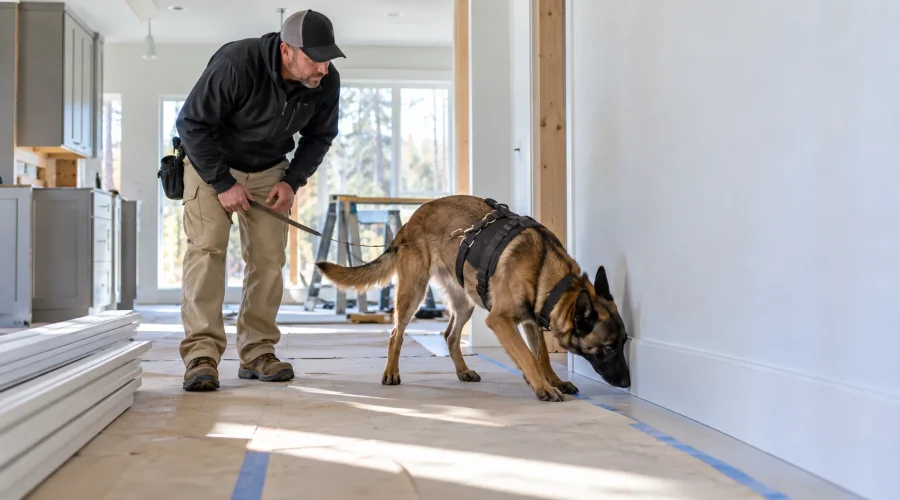
A trained mold detection dog can be helpful when mold may be hidden behind finished surfaces.
Dogs have an extremely strong sense of smell. With proper training, a mold detection dog can recognize specific mold odors and alert its handler when those odors are present.
This can help narrow down areas that may need closer inspection.
For example, a dog may alert near:
- A section of drywall
- Built-in cabinets
- Flooring
- Baseboards
- A bathroom wall
- A window or door frame
- An area near plumbing
That information can help make the inspection more targeted.
Instead of opening walls or removing flooring without knowing where the problem is, the inspector can focus on areas that may need additional testing.
This can reduce unnecessary damage and help homeowners get clearer answers.
Should You Get a Mold Inspection Before Moving Into a New Home?
Not every new home needs a mold inspection, but there are situations where one may be a smart step.
You may want to consider an inspection if:
- The house was exposed to heavy rain while being built
- You saw wet lumber or drywall during construction
- There was a plumbing leak
- The home sat unfinished for a long period
- You notice a musty smell
- You see stains or moisture damage
- The indoor humidity seems unusually high
- You are concerned about hidden moisture
- You want additional peace of mind before moving in
A new construction inspection can also be useful before the final walkthrough or before warranties expire.
Finding a possible problem early can make it easier to document the issue and determine what should happen next.
Why Early Mold Detection Matters
Hidden moisture problems usually do not improve on their own.
If mold is growing inside a wall or under flooring, waiting may allow the affected area to become larger.
Early detection may help prevent:
- More widespread mold growth
- Damage to drywall or wood
- Flooring replacement
- Larger repair costs
- Repeated moisture problems
- Unnecessary demolition later
It is also important to find the source of the moisture.
Removing mold without correcting the moisture problem may allow it to return.
A good inspection is not just about asking, “Is there mold?”
It is also about asking, “Why is this area wet, and where is the moisture coming from?”
That is an important part of solving the problem correctly.
A New Home Can Still Benefit From a Closer Look
New construction can give homeowners a sense of security, but a home does not need to be old to have a moisture or mold problem.
Water exposure can happen at almost any stage of construction.
Rain can soak framing. Plumbing can leak. Humidity can build up. Wet materials can be covered before they are fully dry.
Once the home is finished, those problems may be hidden behind beautiful new walls, cabinets, and floors.
K9 Mold Dog Inspection helps homeowners investigate areas where mold may be difficult to see. A trained mold detection dog can help identify suspicious locations so further testing can be focused where it matters most.
If you are buying a newly built home, recently moved into one, or noticed moisture concerns after construction, a professional mold inspection may help you get answers before a small issue becomes a bigger problem.