Finding hidden mold can feel stressful, especially when you do not know where it is coming from. You may notice a musty smell, see signs of past water damage, or simply feel that something is not right.
The problem is that mold often grows in places you cannot easily see.
It may be behind walls, under flooring, inside cabinets, or near plumbing. Many homeowners worry that finding it means tearing apart large sections of their home.
That is not always the case.
At K9 Mold Dog Inspection, trained mold detection dogs can help identify areas where mold odor may be present. This can make the inspection process more focused and may help reduce unnecessary damage while searching for hidden mold.
Why Hidden Mold Can Be So Hard to Find
Mold needs moisture to grow. Once water gets into a hidden area, mold may begin developing without showing obvious signs on the surface.
For example, a small pipe leak inside a wall may create enough moisture for mold to grow on drywall, wood, or insulation.
From inside the room, the wall may still look perfectly normal.
Hidden mold may develop in areas such as:
- Behind drywall
- Under carpet or flooring
- Beneath sinks
- Around plumbing
- Inside cabinets
- Behind appliances
- Near windows and doors
- Inside wall cavities
This is why a simple visual inspection does not always tell the whole story.
A person can only see what is exposed. Mold may be growing several inches away on the other side of a wall or underneath a surface.
How Mold Detection Dogs Locate Areas of Concern
Dogs have an incredible sense of smell.
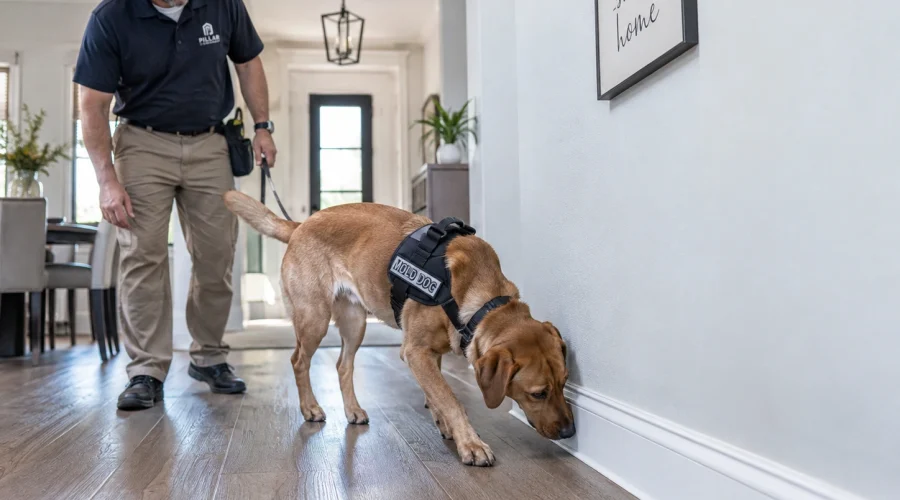
When properly trained, mold detection dogs learn to recognize the odors associated with mold. During an inspection, the dog moves through the home with a trained handler and checks different areas for those odors.
When the dog detects a scent it has been trained to recognize, it alerts the handler.
This does not mean the dog is tearing into anything or damaging the home.
Instead, the dog helps identify locations that may deserve closer attention.
For example, a dog may alert near one specific section of a wall rather than an entire room.
That information can help the inspector decide where additional investigation may be needed.
This approach can be especially valuable when a homeowner already suspects a problem but does not know exactly where it is located.
Why Targeted Detection Can Reduce Unnecessary Damage
Without a clear idea of where hidden mold may be located, investigating walls or floors can become a guessing game.
Imagine having a musty smell in a large living room. If there are no visible signs of mold, where would you start?
Opening multiple sections of drywall just to search for a problem can quickly become expensive and frustrating.
A mold detection dog can help narrow down the search.
Instead of investigating every wall or opening large areas, the inspection can focus on specific locations where the dog alerts.
That may help reduce:
- Unnecessary holes in drywall
- Excessive removal of flooring
- Damage to cabinets
- Time spent searching the wrong areas
- Repair costs caused by unnecessary demolition
Once a specific area has been identified, other tools or testing methods can be used if needed.
The goal is not to guess. The goal is to gather useful information so the next step is more focused.
What Happens After a Mold Detection Dog Alerts?
An alert from a mold detection dog gives the inspector an area to investigate more closely.
Depending on the situation, additional steps may include checking for moisture, examining nearby building materials, taking samples, or recommending further evaluation.
It is also important to understand why moisture is present.
Mold problems are often connected to another issue, such as:
- Plumbing leaks
- Roof leaks
- Poor drainage
- High indoor humidity
- Water entering around windows
- Flooding
- Condensation
Finding mold without finding the moisture source may only solve part of the problem.
If moisture continues to enter the area, mold can return even after cleanup.
That is why a careful inspection should look at the bigger picture instead of only focusing on what is visible.
When a Mold Dog Inspection May Be a Good Choice
You do not need visible mold covering a wall before considering an inspection.
A mold detection dog inspection may be helpful when you suspect something is wrong but cannot locate the source.
You may want to schedule an inspection if you:
- Notice a musty smell but cannot find mold
- Had a roof or plumbing leak
- Recently experienced water damage
- Are concerned about mold behind walls
- Had previous mold problems
- See staining without knowing the cause
- Suspect moisture under flooring
- Want a more targeted inspection before opening walls
The earlier a hidden moisture or mold issue is located, the easier it may be to understand what needs to happen next.
At K9 Mold Dog Inspection, trained mold detection dogs provide another way to search for hidden mold without immediately damaging large areas of your home.
If you are worried about mold but do not want to start tearing into walls without a reason, a professional mold dog inspection can help narrow the search and give you a clearer path forward.