Mold is not always easy to spot. In many homes, it can grow behind drywall, under cabinets, around plumbing, or inside wall cavities without leaving obvious signs at first.
That is what makes hidden mold so frustrating for homeowners. You may notice a musty smell, feel like the air is different, or know there was a past leak, but still see nothing on the walls.
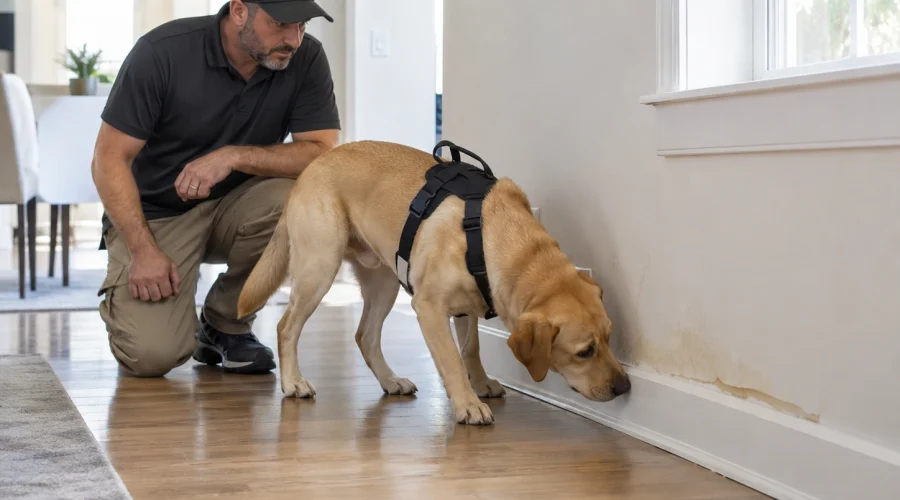
A professional mold inspection can help locate problem areas before unnecessary damage is done to the home. At K9 Mold Dog Inspection, trained mold detection dogs can help narrow down where mold may be hiding, including areas behind drywall that are difficult to inspect by sight alone.
Can Mold Really Grow Behind Drywall?
Yes. Drywall can create a good environment for mold when moisture gets trapped behind it.
The paper surface on drywall contains organic material that mold can use as a food source. Once moisture enters the wall cavity, mold may begin growing even though the outside of the wall still looks normal.
Common causes include:
- Leaking pipes inside walls
- Roof leaks
- Plumbing problems
- Water entering around windows
- High indoor humidity
- Past flooding or water damage
- Condensation inside wall cavities
The problem is that homeowners may not know anything is wrong until the mold has had time to spread.
A small plumbing leak, for example, may slowly dampen the back side of the drywall for weeks or months. The front of the wall may still look clean while mold continues growing inside.
Signs Mold May Be Hiding Behind Your Walls
Hidden mold does not always stay completely hidden. There are often small clues that something is happening behind the surface.
One of the most common signs is a musty or earthy smell that does not go away. You may notice the odor more strongly in one room or near a certain wall.
Other possible warning signs include:
- Paint that bubbles or peels
- Discolored drywall
- Soft or damaged areas on the wall
- Warped baseboards
- Water stains
- A history of plumbing leaks
- Repeated moisture problems
- A room that always feels damp
Sometimes, there are no visible signs at all.
That is one reason hidden mold can be difficult to locate using only a visual inspection.
If you know your home has had water damage in the past, it may be worth checking areas that were exposed to moisture even if everything now looks dry.
How Mold Detection Dogs Can Help Find Hidden Mold
Mold detection dogs use their sense of smell to identify mold odors.
Dogs have an extremely powerful sense of smell compared with humans. When properly trained, they can recognize specific scents and alert their handler when those odors are present.
During an inspection, the dog can move through different areas of the home and indicate locations where mold odor may be strongest.
This can be especially helpful when mold may be behind:
- Drywall
- Cabinets
- Baseboards
- Flooring
- Furniture
- Built in structures
Instead of immediately opening large sections of a wall, a mold detection dog may help narrow the search area.
That can give the inspector a better idea of where additional testing or investigation may be needed.
Why Finding the Right Location Matters
Finding hidden mold is only part of the problem. Finding the correct location is just as important.
Imagine knowing mold is somewhere inside a room but not knowing where it is. Opening walls at random can become expensive and create unnecessary damage.
A targeted inspection can help reduce that guesswork.
Once a suspicious area is identified, the next steps may include moisture testing, air sampling, surface sampling, or further inspection depending on the situation.
This approach can make the investigation more focused.
It may also help homeowners understand whether the problem is connected to a plumbing leak, moisture intrusion, humidity, or another source.
Finding the moisture source is especially important because mold problems can return if the underlying moisture problem is never corrected.
When Should You Schedule a Mold Inspection?
You do not need to wait until mold is covering a wall before asking for help.
There are several situations where a mold inspection may make sense.
Consider scheduling an inspection if you:
- Smell a persistent musty odor
- Recently had a plumbing leak
- Experienced flooding or water damage
- See unexplained stains on walls or ceilings
- Have moisture problems around windows
- Notice damaged drywall
- Had mold removed before and suspect it returned
- Are concerned about an area you cannot easily inspect
The sooner a moisture or mold problem is found, the easier it may be to understand what needs to happen next.
At K9 Mold Dog Inspection, our goal is to help locate areas of concern without turning the process into a guessing game.
A trained mold detection dog can provide another valuable tool when mold may be hiding where homeowners and inspectors cannot easily see.
If you suspect mold may be behind your drywall, inside a wall cavity, or somewhere else in your home, scheduling a professional inspection can help you get clearer answers before the problem becomes larger.