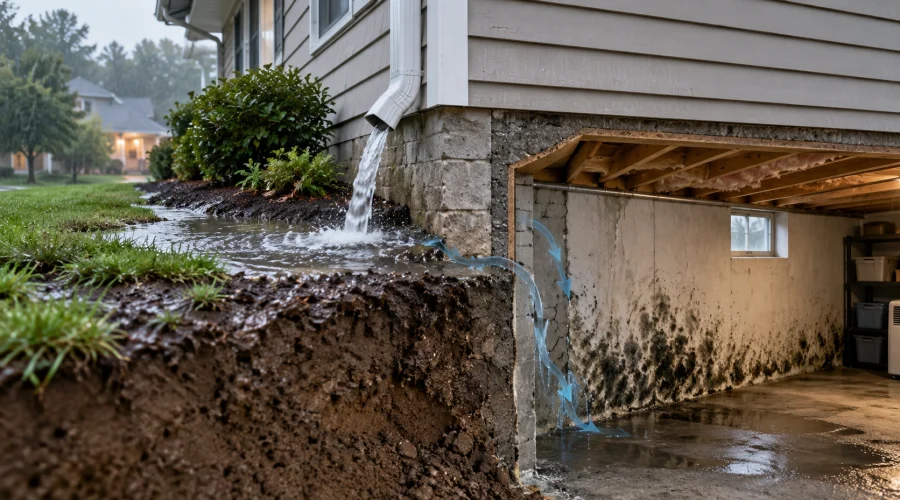
Water around your home may seem like an outdoor problem, but poor drainage can quickly become an indoor mold problem. When rainwater, runoff, or groundwater collects too close to your foundation, moisture can slowly move into basements, crawl spaces, walls, and other hidden areas.
That moisture can create the perfect environment for mold to grow.
The difficult part is that mold does not always appear where you can see it. It may develop behind drywall, under flooring, inside wall cavities, or around insulation. By the time you notice a musty smell or visible staining, the moisture problem may have already been present for some time.
Professional mold inspection experts can help determine whether hidden moisture conditions have created areas where mold may be growing. Understanding how drainage affects your home is an important first step.
How Poor Drainage Brings Moisture Toward Your Home
Your property should move rainwater away from the house. When drainage systems do not work correctly, water can collect near the foundation instead.
This can happen for several reasons.
The soil around the home may slope toward the foundation instead of away from it. Gutters may overflow during heavy rain. Downspouts may release water directly beside the house. Yard drains may become clogged, or low areas in the landscape may hold water for hours or even days.
Over time, this extra moisture can place pressure on foundation walls and find small paths into the building.
Water does not need to flood a room to create a problem. Small amounts of moisture entering repeatedly can raise humidity and keep building materials damp.
Wood, drywall, insulation, carpet, and other materials can hold moisture long enough for mold conditions to develop.
That is why homeowners should pay attention to what happens around the outside of the house after rain. Standing water close to the foundation may be an early warning sign of a larger moisture issue.
Where Mold May Develop Because of Drainage Problems
Moisture caused by poor drainage can affect several parts of a home.
Basements are one of the most common areas because they sit below ground level. Water in the surrounding soil can move through cracks, joints, or porous foundation materials.
Crawl spaces can also become damp when water collects around the foundation. Because these spaces are often dark and have limited airflow, moisture may remain longer than homeowners realize.
A professional mold inspector may also look for signs of moisture around lower walls, flooring, baseboards, and areas near exterior doors.
Common warning areas include:
- Basement walls and floors
- Crawl spaces
- Areas behind baseboards
- Carpet near exterior walls
- Lower sections of drywall
- Utility rooms
- Areas around foundation cracks
- Rooms with persistent musty odors
Mold can sometimes grow in hidden areas before it becomes visible. That makes it important to pay attention to moisture history instead of waiting for large patches of mold to appear.
If a room feels unusually damp after rain or smells different during wet weather, there may be moisture entering somewhere nearby.
Why Mold Detection Can Be Difficult Without Professional Help
Finding mold is not always as easy as spotting a dark stain on a wall.
Visible mold may only represent a small part of the problem. Moisture can travel behind surfaces, allowing growth to develop where homeowners cannot easily inspect.
This is where professional mold detection can become valuable.
A detailed inspection focuses on areas where moisture is likely to collect. Inspectors look for signs such as staining, water damage, unusual odors, condensation, and other conditions that may point toward hidden moisture.
Mold detection dogs may also provide another way to investigate areas that are difficult to access. Specially trained dogs can use their strong sense of smell to help identify locations where mold odor may be present.
This can be especially useful in homes where there is concern about hidden mold but no obvious source.
Instead of opening multiple walls or removing flooring without a clear reason, targeted mold detection may help narrow down areas that deserve closer attention.
The goal is not simply to find visible mold. It is to better understand where moisture problems may be creating conditions for mold growth.
Signs Your Drainage Problem May Be Affecting the Inside of Your Home
Homeowners should not ignore changes that appear after heavy rain.
Sometimes the clues are obvious, such as water entering a basement. Other times, the warning signs are much smaller.
Watch for conditions such as:
- A musty or earthy smell after rainfall
- Damp basement or crawl space walls
- Peeling paint near the bottom of walls
- Discolored drywall
- Warped flooring
- Carpet that feels damp near exterior walls
- White mineral deposits on foundation walls
- Condensation in lower areas of the home
- Mold that keeps returning after cleaning
Recurring mold is especially important to investigate.
Cleaning the visible growth may improve the appearance of the area, but mold often returns when the moisture source has not been corrected.
For example, a homeowner may repeatedly clean a basement wall without realizing that poor grading outside is allowing water to collect beside the foundation.
Until the drainage problem is addressed, the conditions that encourage mold can continue.
When to Call Mold Inspection Experts
You do not have to wait until mold becomes obvious before scheduling an inspection.
If your home has a history of drainage problems, basement moisture, foundation leaks, or standing water near the exterior walls, having the property checked can provide useful information.
Professional mold inspection experts can evaluate areas that may be at greater risk and help identify signs that homeowners often miss.
You may want to schedule an inspection after:
- Repeated basement leaks
- Major storms or flooding
- Long periods of heavy rain
- Discovering standing water near the foundation
- Finding unexplained musty odors
- Purchasing a home with drainage concerns
- Noticing mold that keeps returning
Early inspection can also help homeowners make better decisions about repairs.
If mold is suspected, knowing where the problem may be located can make it easier to address both the moisture source and the affected area.
Protect Your Home by Finding Moisture Problems Early
Poor drainage may begin outside, but the effects can eventually reach the inside of your home.
Water that repeatedly collects near the foundation can raise indoor moisture levels and create conditions where mold may grow in basements, crawl spaces, walls, or flooring.
Watching for drainage problems is important, but hidden mold can still be difficult to locate without professional help.
K9 Mold Dog Inspection provides professional mold detection services designed to help identify areas where mold may be present. If you are concerned about moisture, musty odors, previous water problems, or possible hidden mold, scheduling an inspection can help you better understand what may be happening inside your property.
Finding the problem early can make it easier to take the right next step and protect your home from continued moisture damage.