Mold around windows and doors can be easy to ignore at first. You may notice a few dark spots on the trim, a musty smell near the window, or moisture collecting on the glass. It may look like a small cleaning problem, but sometimes it points to a larger moisture issue hidden inside the wall.
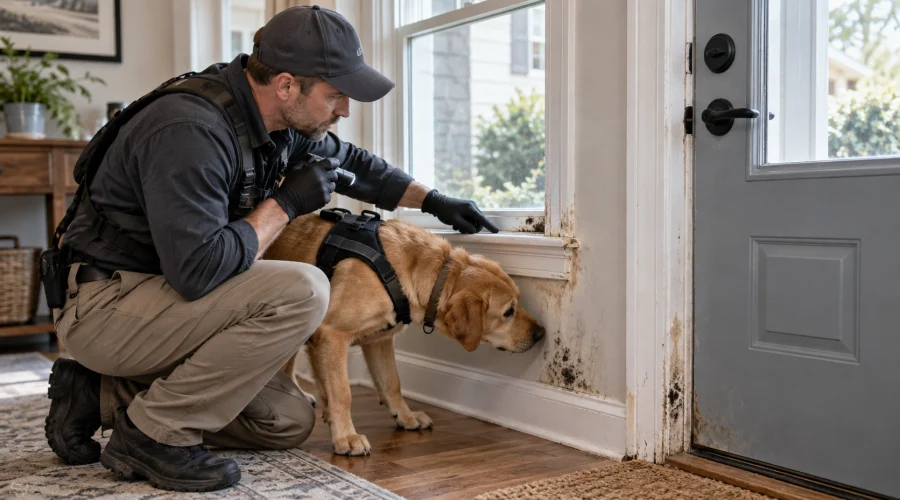
A professional mold inspector can help determine whether the problem is limited to the surface or if there may be hidden mold nearby. At K9 Mold Dog Inspection, trained mold detection dogs can also help locate areas where mold may be present, including places that are difficult to inspect with the eyes alone.
Understanding why mold develops around windows and doors can help you act before a small moisture problem becomes a bigger home repair.
Why Mold Often Appears Around Windows and Doors
Windows and exterior doors are common places for moisture to enter a home. They are also areas where warm indoor air and cooler outdoor temperatures meet.
Condensation can form when warm, humid air touches a cold window. If that moisture stays on the glass, frame, trim, or nearby wall for long periods, mold may begin to grow.
Leaks can create an even bigger problem. Rainwater may enter through damaged seals, cracked caulking, loose flashing, or gaps around the frame. The moisture may travel behind drywall or trim where you cannot easily see it.
Common causes of moisture around windows and doors include:
- Worn or cracked caulking
- Damaged weather stripping
- Leaking window frames
- Poor exterior drainage
- High indoor humidity
- Condensation on glass
- Roof or siding leaks near the opening
- Improper window or door installation
- Water entering during heavy rain
Finding the source of the moisture is important. Cleaning visible mold without fixing the water problem may only provide a temporary solution.
Visible Mold May Only Be Part of the Problem
One of the biggest mistakes homeowners can make is assuming that the mold they see is the only mold present.
For example, you might see a small patch of discoloration on the bottom corner of a window. The surface area could be cleaned, but moisture may have already traveled behind the trim or into the wall.
This is where professional mold detection can become valuable.
Hidden mold can sometimes develop inside wall cavities, behind baseboards, under window sills, or around framing materials. These areas are not always easy to inspect without removing parts of the home.
A professional inspection helps narrow down where additional investigation may be needed. Instead of guessing where mold could be hiding, homeowners can get better information about areas of concern.
At K9 Mold Dog Inspection, specially trained dogs use their powerful sense of smell to identify odors associated with mold. This can help point inspectors toward areas that deserve closer attention.
Signs You Should Call a Mold Inspector
Not every dark mark around a window means there is a serious mold problem. Dirt, dust, mildew, and other materials can sometimes look similar.
However, certain warning signs should not be ignored.
Consider contacting a mold inspector if you notice:
- Mold returning after you clean the area
- A strong or persistent musty odor
- Water stains around windows or doors
- Peeling or bubbling paint
- Soft or damaged drywall
- Warped window trim
- Frequent condensation
- Previous leaks or flooding
- Discoloration spreading beyond the window frame
- Moisture that keeps returning after rain
You should also consider an inspection if you recently discovered a window or door leak that may have been present for a long time.
Water can travel farther than many homeowners expect. The location where you see moisture may not be the exact place where the leak began.
How Mold Inspection Experts Investigate the Area
Experienced mold inspection experts look beyond the visible stain. Their goal is to understand what may be causing the moisture and whether additional areas could be affected.
An inspection may involve examining the window or door, nearby walls, trim, flooring, and surrounding rooms. Moisture detection equipment may also be used to look for damp building materials.
K9 mold detection can add another layer to the inspection.
Dogs have an extremely sensitive sense of smell and can be trained to recognize specific odors. A trained mold detection dog can inspect areas of a property and alert its handler when it detects the target scent.
This can be especially useful when the suspected mold is located behind finished surfaces.
The dog does not replace the inspector. Instead, the dog and handler work together as part of the inspection process.
This approach can help identify areas that may need further testing or investigation without automatically tearing into walls throughout the home.
Do Not Ignore the Moisture Source
Finding mold is only one part of solving the problem.
If water continues entering through a window or door, mold may return even after the affected materials have been cleaned or replaced.
The moisture source should be corrected as part of the overall solution.
Depending on the situation, repairs may include replacing damaged caulk, improving flashing, repairing siding, replacing weather stripping, reducing indoor humidity, or correcting drainage around the property.
Homeowners should also pay attention to condensation. If windows regularly collect heavy moisture, improving ventilation or controlling indoor humidity may help.
The sooner the moisture issue is addressed, the easier it may be to prevent damage from spreading.
Get Answers Before the Problem Gets Bigger
Mold around a window or door can seem minor, but what you see on the surface does not always tell the whole story.
If mold keeps returning, moisture is present, or you notice a musty odor, professional mold detection can help you better understand what may be happening inside your home.
Working with experienced mold inspection experts can help you locate suspicious areas and make more informed decisions about the next step.
K9 Mold Dog Inspection uses trained mold detection dogs to help identify areas where hidden mold may be present. Instead of relying only on what can be seen, a K9 inspection can help uncover areas that deserve closer attention.
If you are concerned about mold around your windows, doors, walls, or other parts of your property, schedule an inspection with K9 Mold Dog Inspection. Getting answers early can help you address moisture problems before they turn into larger repairs.