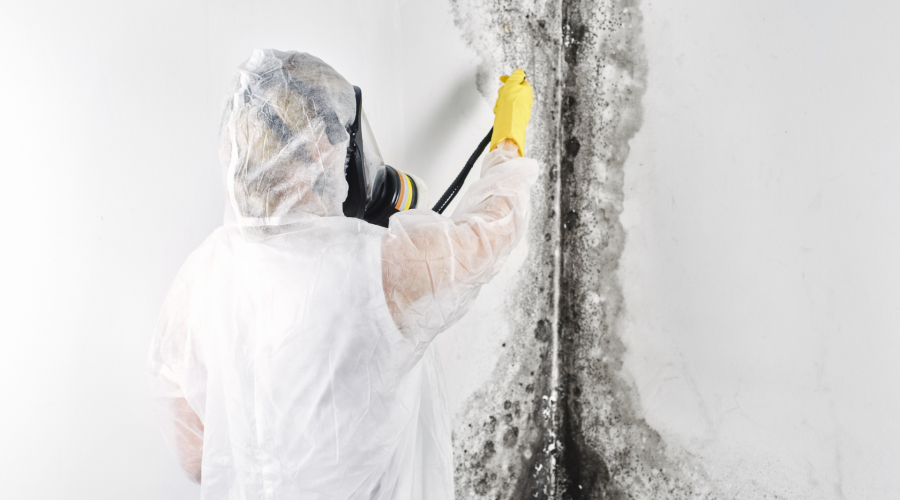
Finding possible mold in your home or business can leave you with many questions. Is the mold only on the surface? Is more mold hiding behind a wall? Did a past leak create a larger problem? Most importantly, who can you trust to give you clear answers?
Choosing the right mold detection company is an important first step. A qualified team can inspect the property, identify areas of concern, and help you make a better plan. The goal should not be to scare you into paying for services you may not need. The goal should be to give you useful information about your property.
Here is what to look for before scheduling a mold inspection.
Understand What the Company Actually Provides
Mold inspection, mold testing, and mold removal are related services, but they are not always the same.
A mold inspection normally includes looking for visible growth, water damage, moisture problems, and other warning signs. Mold testing may include collecting air or surface samples and sending them to a laboratory. Mold remediation is the process of removing affected materials and correcting the conditions that allowed mold to grow.
Testing is not necessary in every situation. The Environmental Protection Agency states that sampling is often unnecessary when visible mold growth is already present. When testing is appropriate, it should be performed by someone who understands proper sampling methods and how to interpret the results.
Before booking a company, ask exactly what its service includes. A good provider should explain:
- Which parts of the property will be checked
- Whether moisture readings will be taken
- Whether air or surface samples are recommended
- How possible mold locations will be documented
- What information you will receive after the inspection
- Whether the company also performs remediation
Clear answers help you compare companies and avoid paying for a service that does not match your needs.
Look for a Detailed Professional Mold Inspection
A professional mold inspection should be more than a quick walk through the building. Mold often grows where moisture has entered or remained for too long. Common problem areas may include bathrooms, basements, attics, kitchens, crawl spaces, utility rooms, and areas near plumbing or roofing leaks.
The EPA explains that moisture control is the key to controlling indoor mold growth. Mold can develop in damp areas, around leaks, or in locations with high humidity. That means an inspector should pay close attention to both possible mold and the moisture source supporting it.
Ask the company how it searches areas that are difficult to see. Some inspections rely mainly on visual clues, moisture meters, and thermal imaging. These tools may provide useful information, but every property is different.
Mold Canine adds another layer to the process by working with Molly, a trained mold detection dog. According to the company, Molly is trained to detect 16 species of toxic mold and can alert the inspection team to specific source locations. This focused approach is designed to help find hidden areas of concern before walls or floors are opened unnecessarily.
Ask Whether the Company Can Locate the Source
Knowing that mold may be somewhere inside a building is helpful. Knowing where it is hiding may be even more useful.
Air samples can provide information about spores collected at one place and time. However, a laboratory result alone may not always show the exact wall, ceiling, cabinet, or flooring area where the mold is growing. A company should be able to explain how it moves from general concern to a more focused search.
This matters because mold removal can become expensive when the affected location is unclear. Without focused information, a remediation team may need to investigate several areas to find the source.
Mold Canine uses canine scent detection to help narrow down possible mold locations. Molly works with an experienced handler and alerts to areas where mold odor is detected. The findings can then help guide additional investigation, testing, or remediation decisions.
No single inspection method should be treated as a magic answer for every property. Instead, look for a company that explains what its method can do, what its limits are, and whether follow-up testing may be helpful.
Choose a Company That Gives Honest Recommendations
Trust is one of the most important parts of hiring a mold detection company. The inspector should explain the findings in plain language and answer your questions without using pressure or fear.
You should also ask whether the inspection company performs mold removal. A company that offers both services may still provide honest work. However, you should understand whether it benefits financially from finding a larger remediation project.
A trustworthy inspection team should be willing to tell you when:
- No clear mold concern was found
- A moisture or plumbing issue needs attention
- Visible mold should be removed without extensive sampling
- Laboratory testing could provide helpful information
- A qualified remediation company should inspect the affected area
- A medical concern should be discussed with a healthcare professional
Be cautious of any company that promises to prove your symptoms are caused by mold. Health responses can vary from person to person. Damp and moldy buildings have been linked with respiratory and allergy-related concerns, but an inspection company is not a replacement for a medical provider.
Questions to Ask Before Booking a Mold Inspection
A brief phone call can tell you a lot about how a company treats its clients. Ask these questions before scheduling your appointment.
What does your mold inspection include?
Request a clear explanation of the process, the areas inspected, and the tools used.
How do you search for hidden mold?
The company should explain how it checks areas that cannot be inspected through sight alone.
Do you recommend mold testing for every property?
Be cautious if testing is automatically required without first considering visible growth, water damage, and the purpose of the inspection.
Will I receive documentation of the findings?
Ask whether you will receive photos, marked locations, written notes, laboratory reports, or other useful information.
Do you perform mold remediation?
Understanding the company’s role can help you identify possible conflicts of interest.
What happens after you find an area of concern?
A reliable provider should explain the possible next steps without pushing you into an immediate purchase.
Get Clearer Answers With Mold Canine
The right mold detection company should help replace uncertainty with a clear plan. It should carefully inspect your property, explain what was found, and help you understand whether further testing or remediation may be needed.
Mold Canine offers a focused approach to hidden mold detection for homes and businesses. Molly works alongside an experienced inspection team to help identify possible mold source locations, reduce unnecessary guesswork, and support more targeted next steps.
Do not wait for a small moisture concern to become a larger and more expensive problem. Contact Mold Canine today to schedule a professional mold inspection and get clearer answers about what may be hiding inside your property.