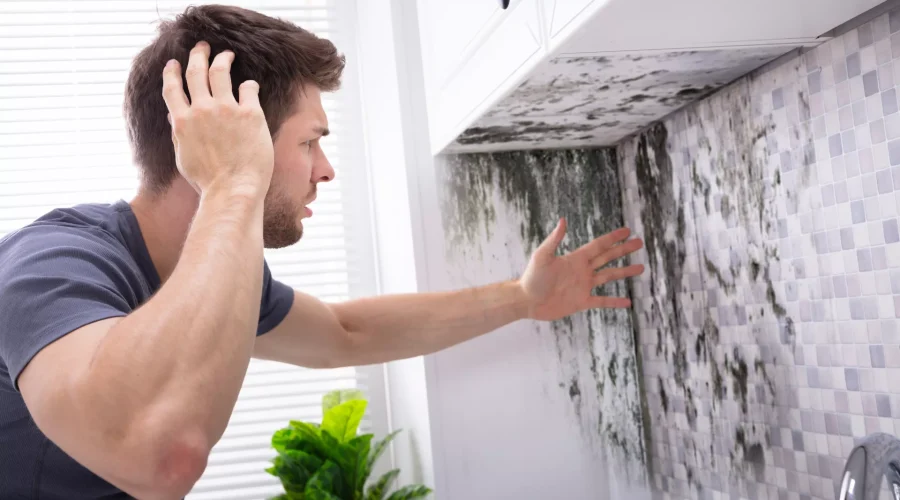
Hidden mold is one of the biggest frustrations for homeowners and business owners. You can smell it. You can feel it. But you can’t always find it.
That’s where testing comes in. But now you’re stuck with another problem. Should you choose a mold dog inspection or traditional air testing?
Let’s break it down in a simple, real-world way so you can make the right call fast.
What Is a Mold Dog Inspection?
A mold dog inspection uses a highly trained detection dog to locate the exact source of mold in a property. These dogs are trained to smell mold spores at extremely low levels, far beyond what humans can detect.
How Mold Detection Dogs Work
Mold sniffing dogs are trained to:
- Identify specific mold odors
- Alert when mold is present
- Pinpoint the exact location of growth
Instead of guessing or testing random areas, the dog scans the space quickly and focuses only on problem spots.
Where Mold Dogs Excel
Mold dogs are especially effective at finding mold:
- Behind walls
- Under flooring
- Inside ceilings
- In HVAC systems
- In hard-to-reach or hidden areas
For both homes and commercial spaces, this means faster answers and less unnecessary damage from cutting into walls.
What Is Air Testing for Mold?
Air testing measures the number of mold spores present in the air inside a property. It helps determine if mold levels are higher than normal.
How Air Testing Works
An inspector collects air samples from inside and outside the building. These samples are then sent to a lab for analysis.
The lab compares:
- Indoor spore levels
- Outdoor spore levels
- Types of mold present
What Air Testing Is Good For
Air testing is helpful for:
- Confirming mold is present
- Measuring indoor air quality
- Supporting documentation for reports or insurance
However, air testing does not show you exactly where the mold is growing.
Speed: Which One Finds Mold Faster?
If speed is your top priority, mold dog inspections have a clear advantage.
Mold Dog Inspection Speed
A trained mold dog can inspect an entire home in a short amount of time. Instead of waiting for lab results, you get immediate feedback during the inspection.
Benefits include:
- Real-time detection
- Immediate location of mold
- Faster decision-making
Air Testing Speed
Air testing takes longer because it involves:
- Sample collection
- Lab processing
- Waiting for results (often 1–3 days or more)
While it provides useful data, it slows down the process when you are trying to act quickly.
Accuracy: Finding the Source vs. Measuring the Problem
Speed is important but accuracy matters even more.
Mold Dog Inspection Accuracy
Mold dogs are trained to locate the source of mold, not just detect its presence.
That means they can:
- Identify the exact area of growth
- Reduce guesswork
- Prevent unnecessary demolition
Instead of opening multiple walls, you can go straight to the problem area.
Air Testing Accuracy
Air testing tells you if mold spores are present in the air but it has limits.
It can:
- Show elevated mold levels
- Identify mold types
But it cannot:
- Pinpoint the exact location
- Tell you how large the growth is
- Confirm where remediation should begin
Cost Comparison: What Saves More Money Long-Term?
At first glance, air testing may seem like the cheaper option. But cost is not just about the initial price. It’s about the total cost of solving the problem.
Mold Dog Inspection Value
Because mold dogs find the exact source, they can:
- Reduce unnecessary wall cuts
- Limit repair costs
- Speed up remediation
This often saves money by avoiding trial-and-error repairs.
Air Testing Costs
Air testing may lead to:
- Multiple inspections
- Additional testing
- More exploratory demolition
If you don’t know where the mold is, you may spend more trying to find it.
When Should You Choose a Mold Dog Inspection?
A mold dog inspection is the best choice when:
- You smell mold but can’t find it
- You’ve had past water damage
- Previous inspections failed to locate the source
- You want fast answers without waiting days
- You want to avoid unnecessary damage to walls or floors
For business owners, this is especially important to reduce downtime and keep operations running.
When Is Air Testing the Right Option?
Air testing is useful when:
- You need documentation for insurance or legal purposes
- You want to measure indoor air quality
- You are confirming mold levels after remediation
It works well as a supporting tool, not always as the first step.
The Best Strategy: Use Both When Needed
In many cases, the smartest approach is not choosing one over the other. It’s using both strategically.
A Powerful Combination
- Start with a mold dog inspection to find the source
- Use air testing to document and verify air quality
This gives you:
- Fast detection
- Accurate location
- Reliable data for reports
It’s a complete approach that protects your property and your health.